


[UPDATED 2025] ISA-IEC-62443 dumps Free Test Engine Verified By Certified Experts
Realistic ISA-IEC-62443 Accurate & Verified Answers As Experienced in the Actual Test!
NEW QUESTION # 20
Which of the following tools has the potential for serious disruption of a control network and should not be
used on a live system?
Available Choices (select all choices that are correct)
- A. FTP
- B. Vulnerability scanner
- C. Remote desktop
- D. Web browser
Answer: B
NEW QUESTION # 21
Authorization (user accounts) must be granted based on which of the following?
Available Choices (select all choices that are correct)
- A. Individual preferences
- B. Common needs for large groups
- C. Specific roles
- D. System complexity
Answer: C
NEW QUESTION # 22
Which activity is part of establishing policy, organization, and awareness?
Available Choices (select all choices that are correct)
- A. Implement countermeasures.
- B. Communicate policies.
- C. Identify detailed vulnerabilities.
- D. Establish the risk tolerance.
Answer: B
Explanation:
According to the ISA/IEC 62443 Cybersecurity Fundamentals Specialist course, establishing policy, organization, and awareness is one of the four steps of the IACS cybersecurity lifecycle. This step involves defining the cybersecurity policies, roles, and responsibilities, as well as communicating them to the relevant stakeholders. It also involves establishing the risk tolerance level, which is the acceptable level of risk for the organization. Communicating policies and establishing the risk tolerance are both activities that are part of this step. Identifying detailed vulnerabilities and implementing countermeasures are activities that belong to the next steps of the lifecycle, which are assessing the current situation and implementing the cybersecurity program, respectively. References: ISA/IEC 62443 Cybersecurity Fundamentals Specialist course, Module 2:
IACS Cybersecurity Lifecycle1
NEW QUESTION # 23
In which layer is the physical address assigned?
Available Choices (select all choices that are correct)
- A. Layer 1
- B. Layer 7
- C. Layer 2
- D. Layer 3
Answer: C
Explanation:
According to the OSI model, the physical address is assigned in the layer 2, also known as the data link layer.
The physical address is a unique identifier for each device on a network, such as a MAC address or a serial number. The data link layer is responsible for transferring data between adjacent nodes on a network, using the physical address to identify the source and destination of each frame. The data link layer also provides error detection and correction, flow control, and media access control. References: ISA/IEC 62443 Cybersecurity Fundamentals Specialist Exam Prep, section 2.2; ISA/IEC 62443 Standards to Secure Your Industrial Control System, section 3.1.2.
NEW QUESTION # 24
Which of the following is an activity that should trigger a review of the CSMS?
Available Choices (select all choices that are correct)
- A. Security incident exposing previously unknown risk.
- B. Budgeting
- C. New technical controls
- D. Organizational restructuring
Answer: A,C,D
Explanation:
According to the ISA/IEC 62443-2-1 standard, a review of the CSMS should be triggered by any changes that affect the cybersecurity risk of the industrial automation and control system (IACS), such as new technical controls, organizational restructuring, or security incidents1. Budgeting is not a trigger for CSMS review, unless it impacts the cybersecurity risk level or the CSMS itself2. References: 1: ISA/IEC 62443-2-1:2010, Section 4.3.3.3 2: A Practical Approach to Adopting the IEC 62443 Standards, ISAGCA Blog3
NEW QUESTION # 25
Which is an important difference between IT systems and IACS?
Available Choices (select all choices that are correct)
- A. The IT security priority is availability.
- B. The IACS security priority is integrity.
- C. Routers are not used in IACS networks.
- D. IACS cybersecurity must address safety issues.
Answer: D
NEW QUESTION # 26
What is OPC?
Available Choices (select all choices that are correct)
- A. An open standard protocol for the communication of real-time data between devices from different manufacturers
- B. An open standard protocol for real-time field bus communication between automation technology devices
- C. An open standard serial communications protocol widely used in industrial manufacturing environments
- D. A vendor-specific proprietary protocol for the communication of real-time plant data between control devices
Answer: A
Explanation:
OPC stands for Open Platform Communications, and it is a series of standards and specifications for industrial telecommunication based on Object Linking and Embedding (OLE) for process control. It allows the communication of real-time data between devices from different manufacturers using various data transportation technologies, such as Microsoft's OLE, COM, DCOM, .NET, XML, and TCP123. OPC is not a protocolitself, but rather a standardized approach for data connectivity supported by the OPC Foundation3. OPC is widely used in industrial automation and control systems, as well as other industries, to achieve interoperability and integration between different applications and devices3.
A is incorrect, because OPC is not a field bus protocol, but rather a standard for data exchange between devices that may use different field bus protocols, such as Modbus, Profibus, or Ethernet/IP2. C is incorrect, because OPC is not a serial communications protocol, but rather a standard that can use various data transportation technologies, including serial, Ethernet, or wireless2. D is incorrect, because OPC is not a vendor-specific proprietary protocol, but rather an open standard that can be implemented by any vendor or device that supports the OPC specifications3. References: 1: Open Platform Communications - Wikipedia 2: What is OPC Protocol - The Automization 3: What is OPC? - OPC Foundation
NEW QUESTION # 27
Authorization (user accounts) must be granted based on which of the following?
Available Choices (select all choices that are correct)
- A. Individual preferences
- B. Common needs for large groups
- C. Specific roles
- D. System complexity
Answer: C
Explanation:
Authorization is the process of granting or denying access to a network resource or function. Authorization (user accounts) must be granted based on specific roles, which are defined as sets of permissions and responsibilities assigned to a user or a group of users. Roles should be based on the principle of least privilege, which means that users should only have the minimum level of access required to perform their tasks. Roles should also be based on the principle of separation of duties, which means that users should not have conflicting or overlapping responsibilities that could compromise the security or integrity of the system.
Authorization based on individual preferences or common needs for large groups is not recommended, as it could lead to excessive or unnecessary access rights, or to inconsistent or conflicting policies. Authorization based on system complexity is also not a good criterion, as it could result in overcomplicated or unclear roles that are difficult to manage or audit. References:
* ISA/IEC 62443-3-3:2013 - Security for industrial automation and control systems - Part 3-3: System security requirements and security levels1
* ISA/IEC 62443-2-1:2010 - Security for industrial automation and control systems - Part 2-1:
Establishing an industrial automation and control systems security program2
* ISA/IEC 62443-4-1:2018 - Security for industrial automation and control systems - Part 4-1: Product security development life-cycle requirements3
NEW QUESTION # 28
Whose responsibility is it to determine the level of risk an organization is willing to tolerate?
Available Choices (select all choices that are correct)
- A. Management
- B. Safety Department
- C. Legal Department
- D. Operations Department
Answer: A
Explanation:
According to the ISA/IEC 62443 standards, the level of risk an organization is willing to tolerate is determined by the management, as they are responsible for defining the business and risk objectives, as well as the security policies and procedures for the organization. The management also has the authority to allocate the necessary resources and assign the roles and responsibilities for implementing and maintaining the security program. The legal, operations, and safety departments may provide input and feedback to the management, but they do not have the final say in determining the risk tolerance level. References: ISA/IEC 62443-2-1:2010
- Establishing an industrial automation and control systems security program, section 4.2.1.
NEW QUESTION # 29
What is the name of the protocol that implements serial Modbus over Ethernet?
Available Choices (select all choices that are correct)
- A. MODBUS/TCP
- B. MODBUS/Plus
- C. MODBUS/Ethernet
- D. MODBUS/CIP
Answer: A
Explanation:
MODBUS/TCP is the name of the protocol that implements serial Modbus over Ethernet. MODBUS/TCP is a variant of the Modbus protocol that uses the Transmission Control Protocol (TCP) as the transport layer to encapsulate Modbus messages and send them over Ethernet networks. MODBUS/TCP preserves the Modbus application layer and data model, which means that serial Modbus devices can communicate with MODBUS/TCP devices through a gateway or a converter. MODBUS/TCP is widely used in industrial automation and control systems, as it offers high performance, interoperability, and compatibility with existing Modbus devices. References: ISA/IEC 62443 Cybersecurity Fundamentals Specialist Study Guide, Section
3.1.21; MODBUS Application Protocol Specification V1.1b3, Section 1.1
NEW QUESTION # 30
Which of the following is an element of monitoring and improving a CSMS?
Available Choices (select all choices that are correct)
- A. Restricted access to the industrial control system to an as-needed basis
- B. Review of system logs and other key data files
- C. Significant changes in identified risk round in periodic reassessments
- D. Increase in staff training and security awareness
Answer: B
NEW QUESTION # 31
Which of the following attacks relies on a human weakness to succeed?
Available Choices (select all choices that are correct)
- A. Denial-of-service
- B. Phishing
- C. Escalation-of-privileges
- D. Spoofing
Answer: B
Explanation:
Phishing is a type of cyberattack that relies on a human weakness to succeed. Phishing is the practice of sending fraudulent emails or other messages that appear to come from a legitimate source, such as a bank, a government agency, or a trusted person, in order to trick the recipient into revealing sensitive information, such as passwords, credit card numbers, or personal details, or into clicking on malicious links or attachments that may install malware or ransomware on their devices. Phishing is a common and effective way of compromising the security of industrial automation and control systems (IACS), as it can bypass technical security measures by exploiting the human factor. Phishing can also be used to gain access to the IACS network, to conduct reconnaissance, to launch further attacks, or to cause damage or disruption to the IACS operations. The ISA/IEC 62443 series of standards recognize phishing as a potential threat vector for IACS and provide guidance and best practices on how to prevent, detect, and respond to phishing attacks. Some of the recommended countermeasures include:
* Educating and training the IACS staff on how to recognize and avoid phishing emails and messages, and how to report any suspicious or malicious activity.
* Implementing and enforcing policies and procedures for email and message security, such as using strong passwords, verifying the sender's identity, and not opening or clicking on unknown or unsolicited links or attachments.
* Applying technical security controls, such as antivirus software, firewalls, spam filters, encryption, and authentication, to protect the IACS devices and network from phishing attacks.
* Monitoring and auditing the IACS network and devices for any signs of phishing attacks, such as
* anomalous or unauthorized traffic, connections, or activities, and taking appropriate actions to contain and mitigate the impact of any incidents. References:
* ISA/IEC 62443-1-1:2009, Security for industrial automation and control systems - Part 1-1:
Terminology, concepts and models1
* ISA/IEC 62443-2-1:2009, Security for industrial automation and control systems - Part 2-1: Establishing an industrial automation and control systems security program2
* ISA/IEC 62443-2-4:2015, Security for industrial automation and control systems - Part 2-4: Security program requirements for IACS service providers3
* ISA/IEC 62443-3-3:2013, Security for industrial automation and control systems - Part 3-3: System security requirements and security levels4
* ISA/IEC 62443-4-2:2019, Security for industrial automation and control systems - Part 4-2: Technical security requirements for IACS components5
NEW QUESTION # 32
Which statement is TRUE regarding Intrusion Detection Systems (IDS)?
Available Choices (select all choices that are correct)
- A. They are very inexpensive to design and deploy.
- B. They are effective against known vulnerabilities.
- C. They require a small amount of care and feeding
- D. Modern IDS recognize IACS devices by default.
Answer: B
Explanation:
Intrusion detection systems (IDS) are tools that monitor network traffic and detect suspicious or malicious activity based on predefined rules or signatures. They are effective against known vulnerabilities, as they can alert the system administrators or security personnel when they encounter a match with a known attack pattern or behavior. However, IDS have some limitations and challenges, especially when applied to industrial automation and control systems (IACS). Some of these are:
* Modern IDS do not recognize IACS devices by default, as they are designed for general-purpose IT networks and protocols. Therefore, they may generate false positives or negatives when dealing with IACS-specific devices, protocols, or traffic patterns. To overcome this, IDS need to be customized or adapted to the IACS environment and context, which may require additional expertise and resources.
* They are not very inexpensive to design and deploy, as they require careful planning, configuration, testing, and maintenance. They also need to be integrated with other security tools and processes, such as firewalls, antivirus, patch management, incident response, etc. Moreover, they may introduce additional costs and risks, such as network performance degradation, data privacy issues, or legal liabilities.
* They are not effective against unknown or zero-day vulnerabilities, as they rely on predefined rules or signatures that may not cover all possible attack scenarios or techniques. Therefore, they may fail to detect novel or sophisticated attacks that exploit new or undiscovered vulnerabilities. To mitigate this, IDS need to be complemented with other security measures, such as anomaly detection, threat intelligence, or machine learning.
* They require a significant amount of care and feeding, as they need to be constantly updated, tuned, and monitored. They also generate a large amount of data and alerts, which may overwhelm the system administrators or security personnel. Therefore, they need to be supported by adequate tools and processes, such as data analysis, alert filtering, prioritization, correlation, or visualization.
References: ISA/IEC 62443-2-1:2010 - Establishing an industrial automation and control system security program, ISA/IEC 62443-3-3:2013 - System security requirements and security levels, ISA/IEC 62443 Cybersecurity Fundamentals Specialist Training Course, [Enhancing Modbus/TCP-Based Industrial Automation and Control Systems Security Using Intrusion Detection Systems]
NEW QUESTION # 33
Which is one of the PRIMARY goals of providing a framework addressing secure product development life-cycle requirements?
Available Choices (select all choices that are correct)
- A. Aligned needs of industrial users
- B. Aligned development process
- C. Well-documented security policies and procedures
- D. Defense-in-depth approach to designing
Answer: C
Explanation:
One of the primary goals of providing a framework that addresses secure product development lifecycle requirements is to ensure that security policies and procedures are well-documented. This objective is crucial because it establishes a structured and standardized approach to security that is integrated throughout the development process of software or systems. This framework helps in aligning the development process with security best practices, thereby mitigating risks associated with security vulnerabilities. Documentation of security policies and procedures ensures that security considerations are consistently applied and that compliance with relevant standards, such as ISA/IEC 62443, is maintained. This foundational approach supports the overall security posture by embedding security considerations directly into the lifecycle of product development, rather than addressing security as an afterthought.
NEW QUESTION # 34
What is the name of the missing layer in the Open Systems Interconnection (OSI) model shown below?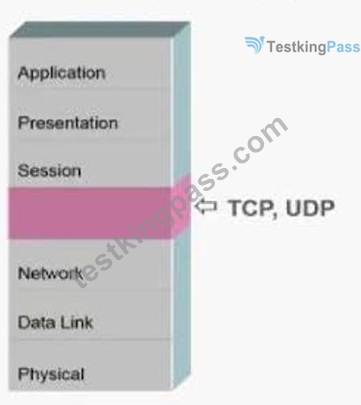
- A. Protocol
- B. Transport
- C. User
- D. Control
Answer: B
NEW QUESTION # 35
Which of the following is a recommended default rule for IACS firewalls?
Available Choices (select all choices that are correct)
- A. Block all traffic by default.
- B. Allow traffic directly from the IACS network to the enterprise network.
- C. Allow all traffic by default.
- D. Allow IACS devices to access the Internet.
Answer: A
NEW QUESTION # 36
Which activity is part of establishing policy, organization, and awareness?
Available Choices (select all choices that are correct)
- A. Implement countermeasures.
- B. Communicate policies.
- C. Identify detailed vulnerabilities.
- D. Establish the risk tolerance.
Answer: B
NEW QUESTION # 37
What are the four main categories for documents in the ISA-62443 (IEC 62443) series?
Available Choices (select all choices that are correct)
- A. General. Policies and Procedures. System, and Component
- B. End-User, Integrator, Vendor, and Regulator
- C. People. Processes. Technology, and Training
- D. Assessment. Mitigation. Documentation, and Maintenance
Answer: A
Explanation:
The ISA/IEC 62443 series of standards is organized into four main categories for documents, based on the topics and perspectives that they cover. These categories are: General, Policies and Procedures, System, and Component12.
* General: This category covers topics that are common to the entire series, such as terms, concepts, models, and overview of the standards1. For example, ISA/IEC 62443-1-1 defines the terminology, concepts, and models for industrial automation and control systems (IACS) security3.
* Policies and Procedures: This category focuses on methods and processes associated with IACS security, such as risk assessment, system design, security management, and security program development1. For example, ISA/IEC 62443-2-1 specifies the elements of an IACS security management system, which defines the policies, procedures, and practices to manage the security of IACS4.
* System: This category is about requirements at the system level, such as security levels, security zones, security lifecycle, and technical security requirements1. For example, ISA/IEC 62443-3-3 specifies the system security requirements and security levels for zones and conduits in an IACS5.
* Component: This category provides detailed requirements for IACS products, such as embedded devices, network devices, software applications, and host devices1. For example, ISA/IEC 62443-4-2 specifies the technical security requirements for IACS components, such as identification and authentication, access control, data integrity, and auditability.
The other options are not valid categories for documents in the ISA/IEC 62443 series of standards, as they either do not reflect the structure and scope of the standards, or they mix different aspects of IACS security that are covered by different categories. For example, end-user, integrator, vendor, and regulator are not categories for documents, but rather roles or stakeholders that are involved in IACS security. Assessment, mitigation, documentation, and maintenance are not categories for documents, but rather activities or phases that are part of the IACS security lifecycle. People, processes, technology, and training are not categories for documents, but rather elements or dimensions that are essential for IACS security.
References:
* ISA/IEC 62443 Series of Standards - ISA1
* IEC 62443 - Wikipedia2
* ISA/IEC 62443-1-1: Concepts and models3
* ISA/IEC 62443-2-1: Security management system4
* ISA/IEC 62443-3-3: System security requirements and security levels5
* ISA/IEC 62443-4-2: Technical security requirements for IACS components
NEW QUESTION # 38
Within the National Institute of Standards and Technoloqv Cybersecuritv Framework v1.0 (NIST CSF), what is the status of the ISA 62443 standards?
Available Choices (select all choices that are correct)
- A. They are not used.
- B. They are used as informative references.
- C. They are used as normative references.
- D. They are under consideration for future use.
Answer: B
Explanation:
The NIST CSF is a voluntary framework that provides a set of standards, guidelines, and best practices to help organizations manage cybersecurity risks. The NIST CSF consists of five core functions: Identify, Protect, Detect, Respond, and Recover. Each function is further divided into categories and subcategories that describe specific outcomes and activities. The NIST CSF also provides informative references that link the subcategories to existing standards, guidelines, and practices that can help organizations achieve the desired outcomes. The informative references are not mandatory or exhaustive, but rather serve as examples of possible sources of guidance. The ISA 62443 standards are used as informative references in the NIST CSF v1.0 for several subcategories, especially in the Protect and Detect functions. The ISA 62443 standards are a series of standards that provide a framework for securing industrial automation and control systems (IACS).
The ISA 62443 standards cover various aspects of IACS security, such as terminology, concepts, requirements, policies, procedures, and technical specifications. The ISA 62443 standards are aligned with the NIST CSF in terms of the core functions and the risk-based approach. Therefore, the ISA 62443 standards can provide useful guidance and best practices for organizations that use IACS and want to implement the NIST CSF. References:
* NIST Cybersecurity Framework - Official Site1
* Framework for Improving Critical Infrastructure Cybersecurity - Version 1.02
* ISA/IEC 62443 Standards - Official Site3
* ISA/IEC 62443 Compliance & Scoring | Centraleyes4
NEW QUESTION # 39
Which of the following is a cause for the increase in attacks on IACS?
Available Choices (select all choices that are correct)
- A. The move away from commercial off the shelf (COTS) systems, protocols, and networks
- B. Use of proprietary communications protocols
- C. Fewer personnel with system knowledge having access to IACS
- D. Knowledge of exploits and tools readily available on the Internet
Answer: A
NEW QUESTION # 40
......
Latest ISA ISA-IEC-62443 Practice Test Questions: https://www.testkingpass.com/ISA-IEC-62443-testking-dumps.html
May-2025 Pass ISA ISA-IEC-62443 Exam in First Attempt Easily: https://drive.google.com/open?id=1MykU9jj2oyOgXgfe9GbPHi-JmrJHe9Gg