


Real Microsoft AI-102 Exam Questions [Updated 2026]
AI-102 Exam Dumps Pass with Updated 2026 Designing and Implementing a Microsoft Azure AI Solution
NEW QUESTION # 171
You are building a solution in Azure that will use Azure AI Language service to process sensitive customer data.
You need to ensure that only specific Azure processes can access the Language service. The solution must minimize administrative.
What should you include in the solution?
- A. Azure Application Gateway
- B. A virtual network gateway
- C. Virtual network rules
- D. IPsec rules
Answer: C
Explanation:
You're using Azure AI Language with sensitive data and need to ensure only specific Azure processes (subnets) can access the resource with minimal administration.
Configure Virtual Network (VNet) rules on the Azure AI (Cognitive Services) resource and enable service endpoints (Microsoft.CognitiveServices) on the selected subnets. This restricts access to requests originating from those VNets/subnets-no need to deploy or manage gateways or IPsec tunnels, keeping operational overhead low. If even stronger isolation is needed later, you can move to private endpoints, but VNet rules + service endpoints meet the requirement and minimize admin effort.
Other options:
* A. Azure Application Gateway - L7 load balancer; does not restrict service access by itself.
* B. IPsec rules - would require VPN/ExpressRoute setup and more admin overhead.
* C. Virtual network gateway - used for cross-premises connectivity, not needed just to restrict access to the Language service.
Microsoft References
* Azure AI services network isolation: virtual networks, firewall, and service endpoints.
* Configure virtual network rules for Cognitive Services (Microsoft.CognitiveServices service endpoint).
* Private endpoints for Azure AI services (for future stronger isolation, if needed).
NEW QUESTION # 172
You build a language model by using Conversational Language Understanding. The language model is used to search for information on a contact list by using an intent named Findcontact. A conversational expert provides you with the following list of phrases to use for training
* Find contacts in London.
* Who do I know in Seattle?
* Search for contacts m Ukraine.
You need to implement the phrase list in Conversational Language Understanding.
Solution: You create a new utterance for each phrase in the FindContact intent.
- A. No
- B. Yes
Answer: B
Explanation:
Conversational Language Understanding (CLU) is trained using utterances .
Adding these example phrases as utterances for the FindContact intent is exactly how training is done.
This ensures the model learns to recognize similar queries.
Reference: Train Conversational Language Understanding models
NEW QUESTION # 173
You need to store event log data that is semi-structured and received as the logs occur. What should you use?
- A. Azure Table storage
- B. Azure Files
- C. Azure Queue storage
Answer: A
Explanation:
* Event log data is typically semi-structured (key-value pairs, JSON-like format).
* Azure Table Storage is a NoSQL key-value store that is ideal for storing semi-structured, non- relational datasets.
* Logs arrive as events occur, so they can be appended as rows in table storage.
Other options:
* Azure Queue storage # Used for messaging between application components, not for storing logs.
* Azure Files # Cloud-based SMB file shares, not optimized for event log storage.
The answer: Azure Table storage
Reference: Azure Table storage overview
NEW QUESTION # 174
Case Study 2 - Contoso, Ltd.
General Overview
Contoso, Ltd. is an international accounting company that has offices in France. Portugal, and the United Kingdom. Contoso has a professional services department that contains the roles shown in the following table.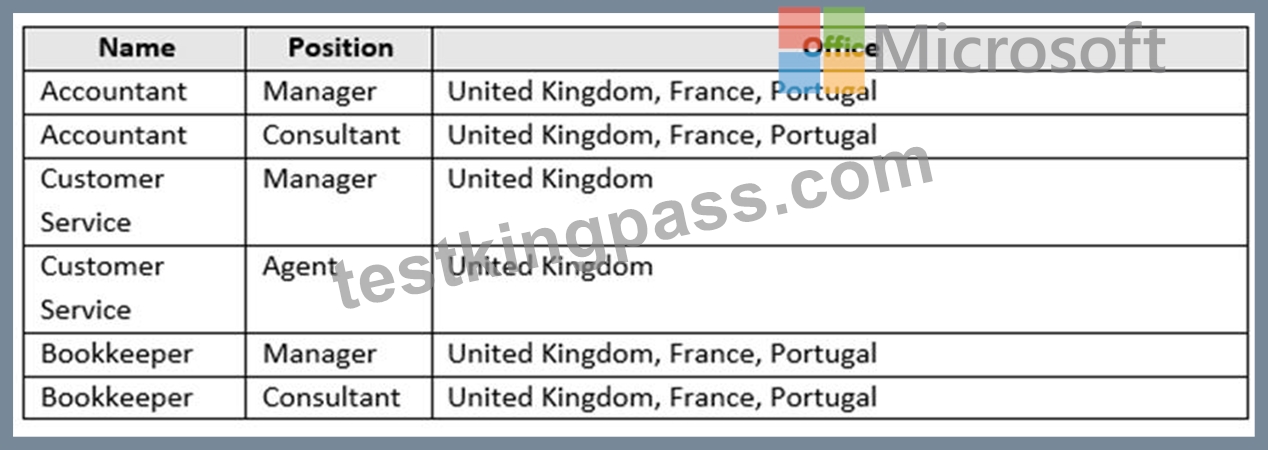
Infrastructure
Contoso has the following subscriptions:
- Azure
- Microsoft 365
- Microsoft Dynamics 365
Azure Active (Azure AD) Directory
Contoso has Azure Active Directory groups for securing role-based access. The company uses the following group naming conventions:
- ICountryJ-[Levell-[Role]
- [Level]-[Role]
Intellectual Property
Contoso has the intellectual property shown in the following table.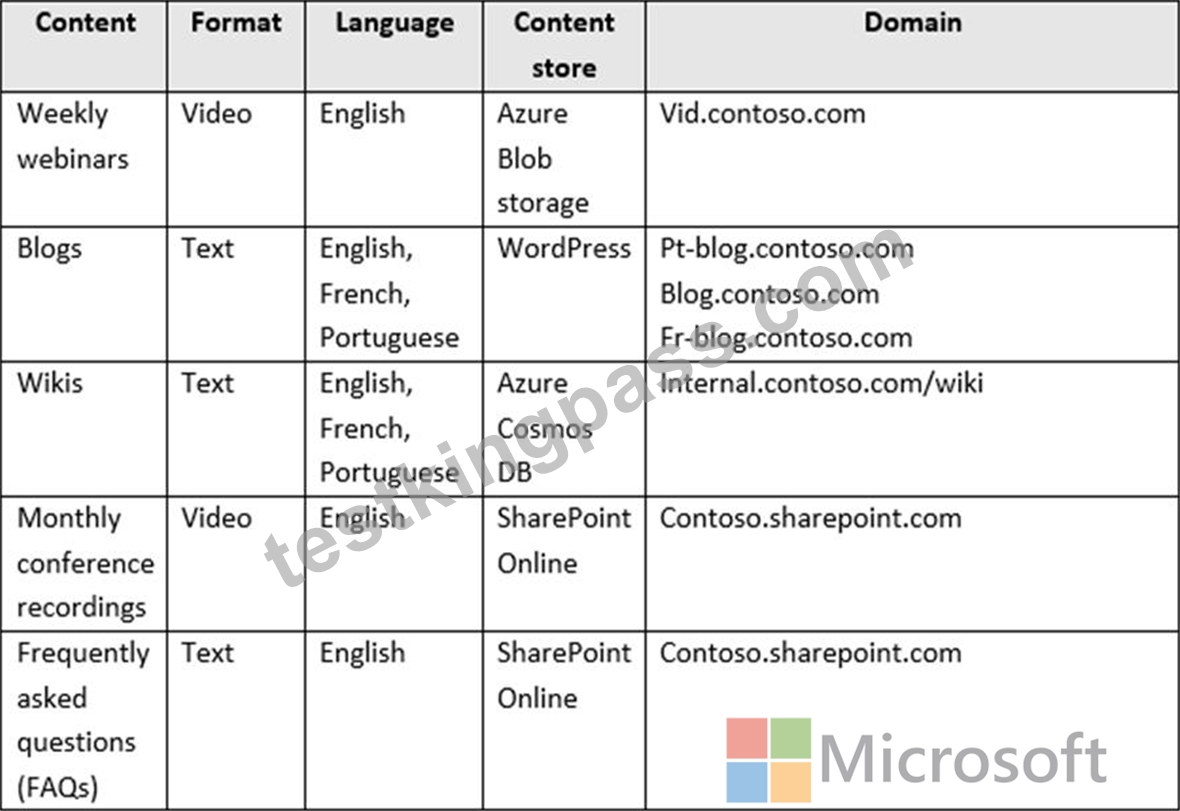
Text-based content is provided only in one language and is not translated.
Planned Projects
Contoso plans to develop the following:
- A document processing workflow to extract information automatically from PDFs and images of financial documents
- A customer-support chatbot that will answer questions by using FAQs
- A searchable knowledgebase of all the intellectual property
Technical Requirements
Contoso identifies the following technical requirements:
- All content must be approved before being published.
- All planned projects must support English, French, and Portuguese.
- All content must be secured by using role-based access control (RBAC).
- RBAC role assignments must use the principle of least privilege.
- RBAC roles must be assigned only to Azure Active Directory groups.
- Al solution responses must have a confidence score that is equal to or greater than 70 percent.
- When the response confidence score of an Al response is lower than 70 percent, the response must be improved by human input.
Chatbot Requirements
Contoso identifies the following requirements for the chatbot:
- Provide customers with answers to the FAQs.
- Ensure that the customers can chat to a customer service agent.
- Ensure that the members of a group named Management-Accountants can approve the FAQs.
- Ensure that the members of a group named Consultant-Accountants can create and amend the FAQs.
- Ensure that the members of a group named the Agent-CustomerServices can browse the FAQs.
- Ensure that access to the customer service agents is managed by using Omnichannel for Customer Service.
- When the response confidence score is low.
- Ensure that the chatbot can provide other response options to the customers.
Document Processing Requirements
Contoso identifies the following requirements for document processing:
- The document processing solution must be able to process standardized financial documents that have the following characteristics:
- Contain fewer than 20 pages.
- Be formatted as PDF or JPEG files.
- Have a distinct standard for each office.
- The document processing solution must be able to extract tables and text from the financial documents.
- The document processing solution must be able to extract information from receipt images.
- Members of a group named Management-Bookkeeper must define how to extract tables from the financial documents.
- Members of a group named Consultant-Bookkeeper must be able to process the financial documents.
Knowledgebase Requirements
Contoso identifies the following requirements for the knowledgebase:
- Supports searches for equivalent terms
- Can transcribe jargon with high accuracy
- Can search content in different formats, including video
- Provides relevant links to external resources for further research
Hotspot Question
You are developing the knowledgebase by using Azure AI Search.
You need to build a skill that will be used by indexers.
How should you complete the code? To answer, select the appropriate options in the answer area.
NOTE: Each correct selection is worth one point.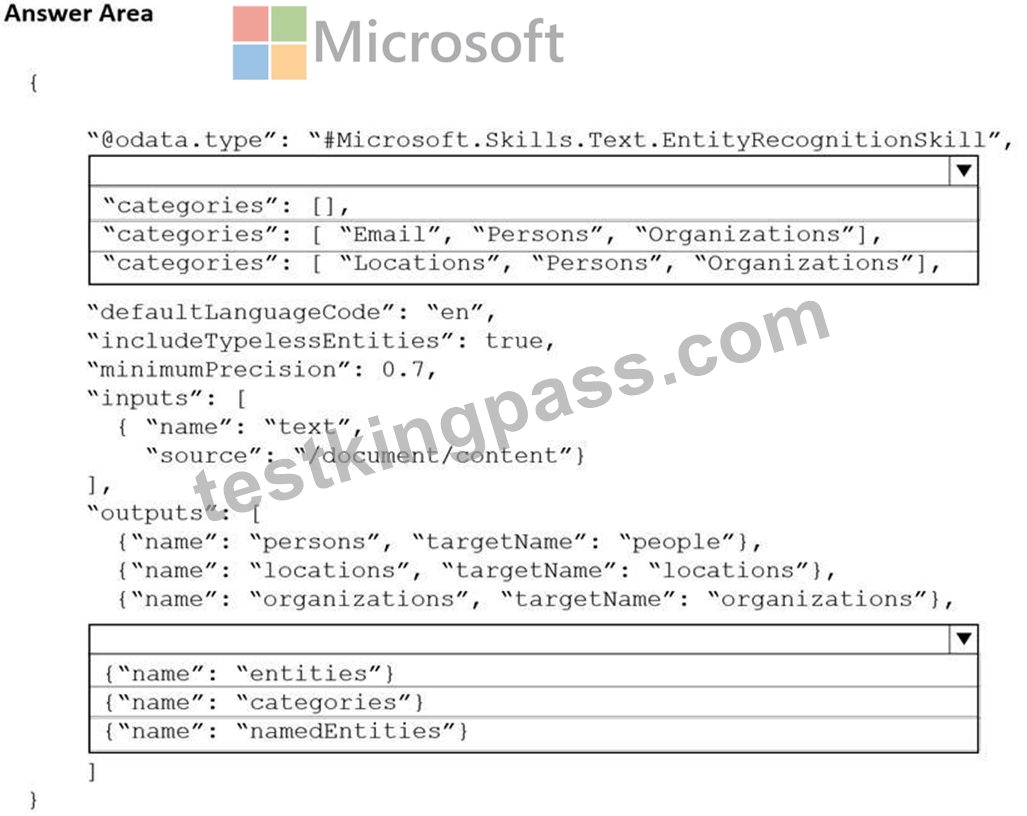
Answer:
Explanation: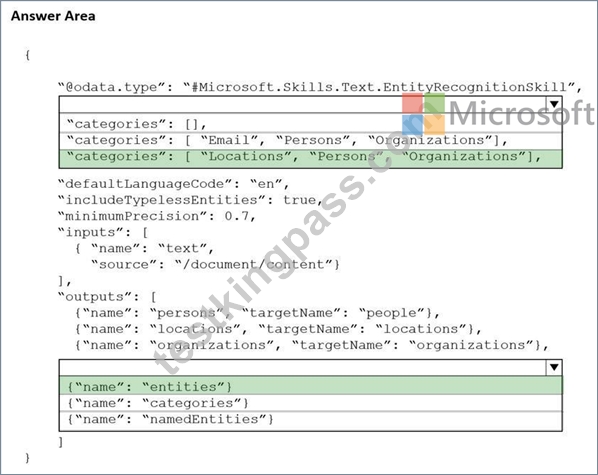
Explanation:
Box 1: "categories": ["Locations", "Persons", "Organizations"], Locations, Persons, Organizations are in the outputs.
Scenario: Contoso plans to develop a searchable knowledgebase of all the intellectual property Note: The categories parameter is an array of categories that should be extracted. Possible category types: "Person", "Location", "Organization", "Quantity", "Datetime", "URL", "Email". If no category is provided, all types are returned.
Box 2: {"name": " entities"}
The include wikis, so should include entities in the outputs.
Note: entities is an array of complex types that contains rich information about the entities extracted from text, with the following fields name (the actual entity name. This represents a "normalized" form) wikipediaId wikipediaLanguage wikipediaUrl (a link to Wikipedia page for the entity) etc.
Reference:
https://docs.microsoft.com/en-us/azure/search/cognitive-search-skill-entity-recognition
NEW QUESTION # 175
You are building an agent by using the Azure Al Agent Service.
You need to ensure that the agent can access publicly accessible data that was released during the past 90 days.
How should you complete the code? To answer, select the appropriate options in the answer area.
NOTE: Each correct selection is worth one point.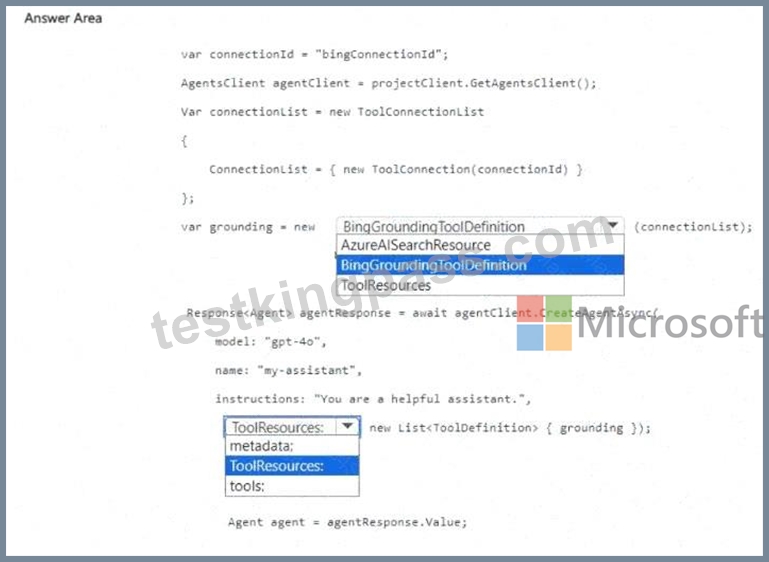
Answer:
Explanation: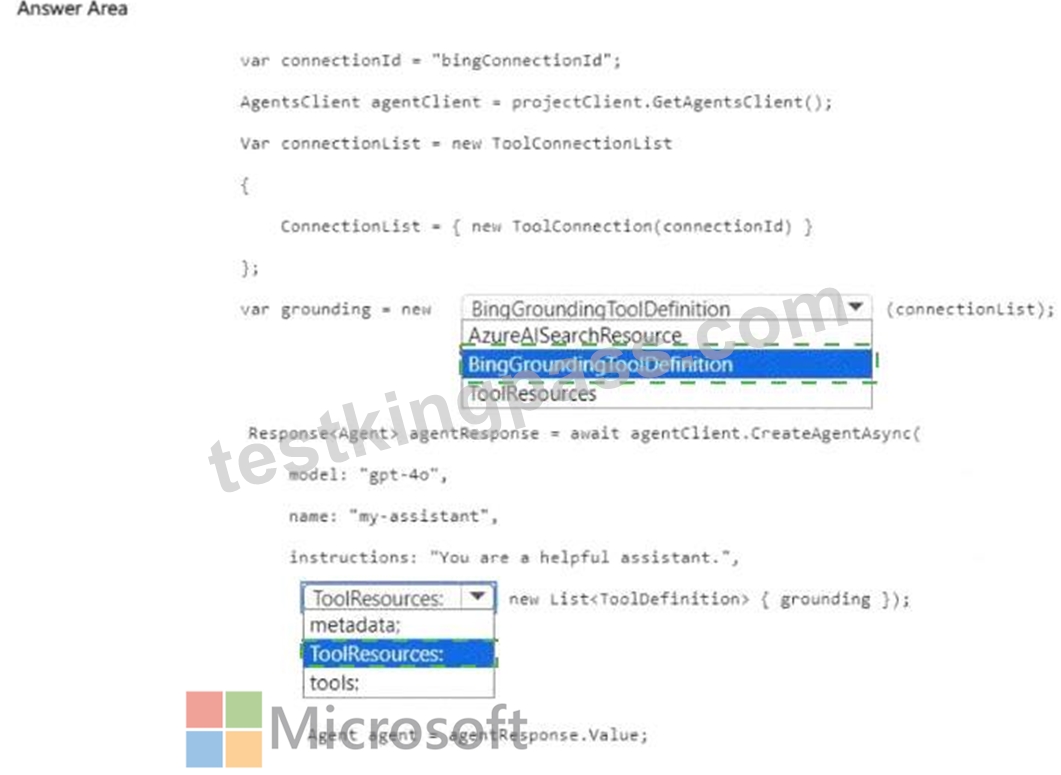
Explanation: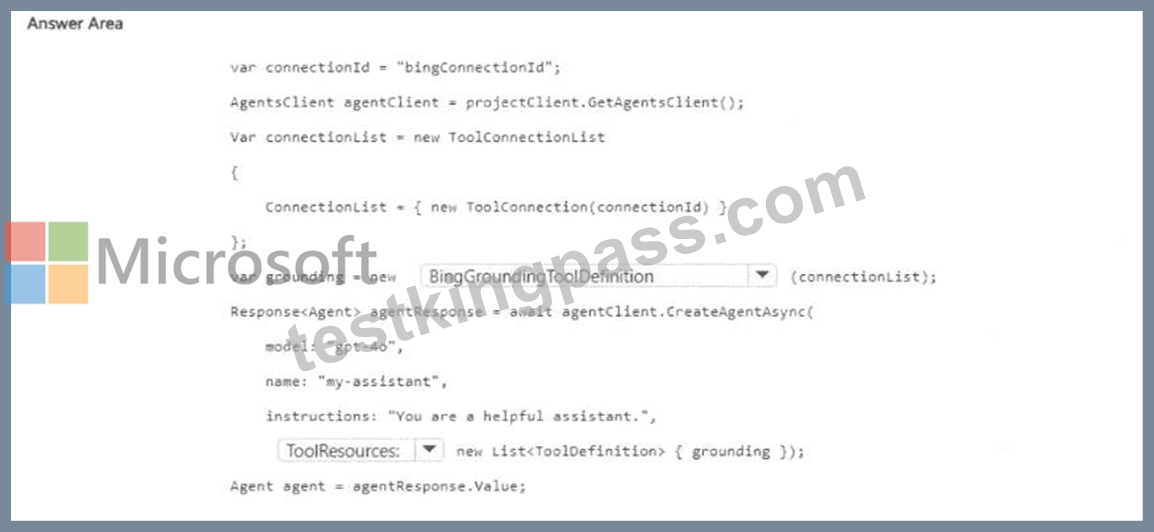
To let an Azure AI Agent access publicly available, recent web content, you add the Bing grounding tool. In the SDK, you first define a ToolConnectionList with the Bing connection ID (here, " bingConnectionId " ), then construct a BingGroundingToolDefinition(connectionList) so the agent can call Bing Search with recency filters (e.g., last 90 days) when answering questions.
When creating the agent, tool definitions are passed via the tools: parameter of CreateAgentAsync(...) as a List < ToolDefinition > . The toolResources parameter is used when you must also supply resource descriptors (for example, an Azure AI Search index configuration), which is not needed here because the Bing grounding tool already references the connection through the ToolConnectionList .
Therefore:
Use BingGroundingToolDefinition to ground the agent on current public web data.
Provide that tool in tools: new List < ToolDefinition > { grounding } when calling CreateAgentAsync(...) .
Microsoft Azure AI References (titles only)
Azure AI Agent Service - Bing web grounding tool (tool definitions and connections) Azure AI Agent Service SDK - Agent creation ( CreateAgentAsync parameters: tools vs toolResources ) Azure AI Agent Service - Tool connections and ToolConnectionList usage
NEW QUESTION # 176
Note: This question is part of a series of questions that present the same scenario. Each question in the series contains a unique solution that might meet the stated goals. Some question sets might have more than one correct solution, while others might not have a correct solution.
After you answer a question in this section, you will NOT be able to return to it. As a result, these questions will not appear in the review screen.
You create a web app named app1 that runs on an Azure virtual machine named vm1. Vm1 is on an Azure virtual network named vnet1.
You plan to create a new Azure AI Search service named service1.
You need to ensure that app1 can connect directly to service1 without routing traffic over the public internet.
Solution: You deploy service1 and a public endpoint, and you configure an IP firewall rule.
Does this meet the goal?
- A. Yes
- B. No
Answer: B
Explanation:
Instead deploy service1 and a private (not public) endpoint to a new virtual network, and you configure Azure Private Link.
Reference:
https://docs.microsoft.com/en-us/azure/private-link/private-link-overview
NEW QUESTION # 177
Match the types of workloads to the appropriate scenarios.
To answer, drag the appropriate workload type from the column on the left to its scenario on the right. Each workload type may he used once, more than once, or not at all.
NOTE: Each correct match is worth one point.
Answer:
Explanation:
NEW QUESTION # 178
You are reviewing the design of a chatbot. The chatbot includes a language generation file that contains the following fragment.
# Greet(user)
- ${Greeting()}, ${user.name}
For each of the following statements, select Yes if the statement is true. Otherwise, select No.
NOTE: Each correct selection is worth one point.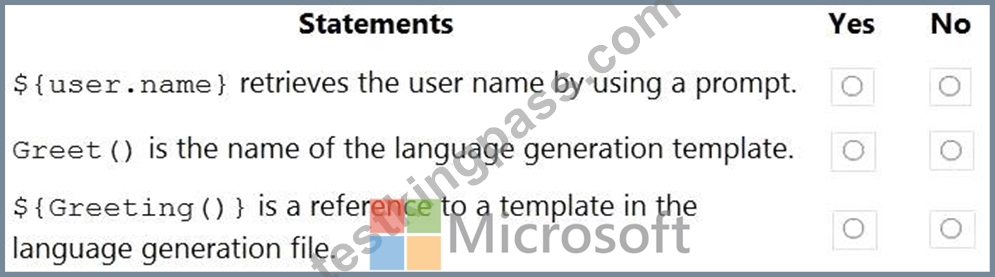
Answer:
Explanation: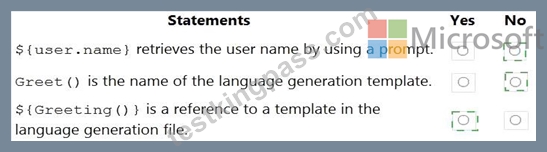
Explanation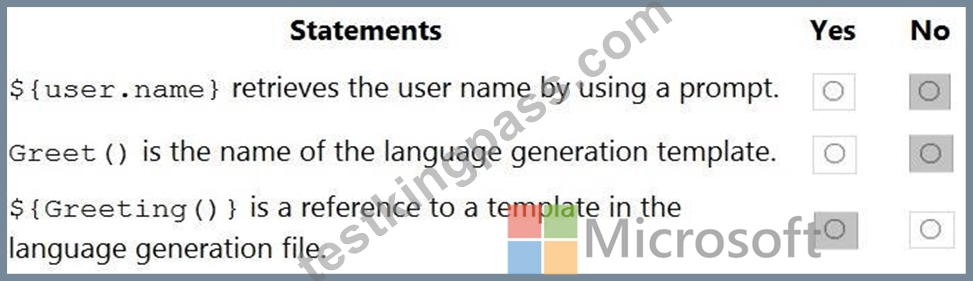
Box 1: No
Example: Greet a user whose name is stored in `user.name`
- ${ welcomeUser(user.name) }
Example: Greet a user whose name you don't know:
- ${ welcomeUser() }
Box 2: No
Greet(User) is a Send a response action.
Box 3: Yes
Reference:
https://docs.microsoft.com/en-us/composer/how-to-ask-for-user-input
NEW QUESTION # 179
You are building a model that will be used in an iOS app.
You have images of cats and dogs. Each image contains either a cat or a dog.
You need to use the Custom Vision service to detect whether the images is of a cat or a dog.
How should you configure the project in the Custom Vision portal? To answer, select the appropriate options in the answer area.
NOTE: Each correct selection is worth one point.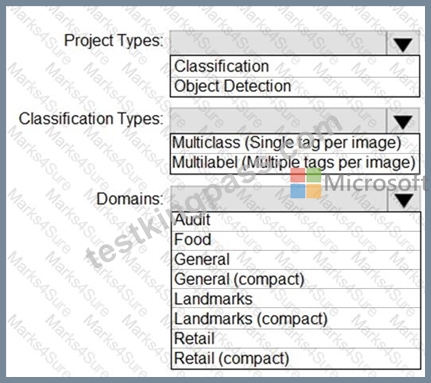
Answer:
Explanation: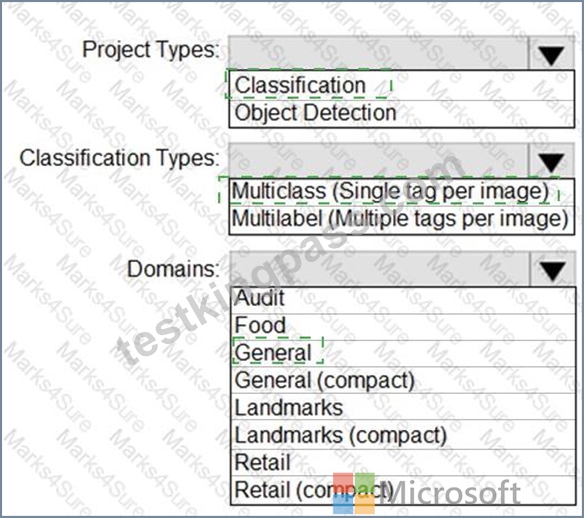
Explanation: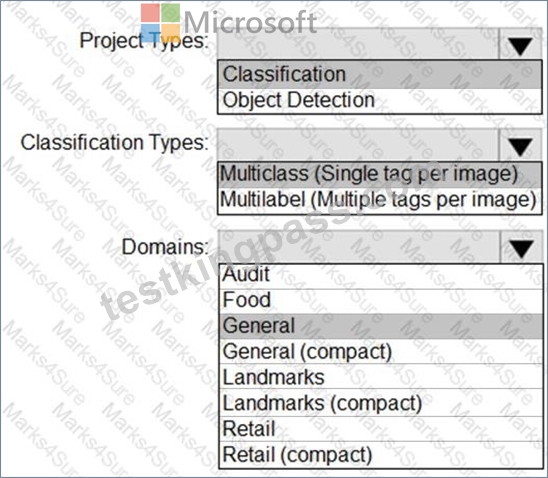
Box 1: Classification
Box 2: Multiclass
A multiclass classification project is for classifying images into a set of tags, or target labels. An image can be assigned to one tag only.
Box 3: General
General: Optimized for a broad range of image classification tasks. If none of the other specific domains are appropriate, or if you're unsure of which domain to choose, select one of the General domains.
Reference:
https://cran.r-project.org/web/packages/AzureVision/vignettes/customvision.html
NEW QUESTION # 180
You are building a chatbot by using the Microsoft Bot Framework SDK.
You use an object named UserProfile to store user profile information and an object named ConversationData to store information related to a conversation.
You create the following state accessors to store both objects in state.
var userStateAccessors = _userState.CreateProperty<UserProfile>(nameof(UserProfile)); var conversationStateAccessors = _conversationState.CreateProperty<ConversationData>(nameof(ConversationData)); The state storage mechanism is set to Memory Storage.
For each of the following statements, select Yes if the statement is true. Otherwise, select No.
NOTE: Each correct selection is worth one point.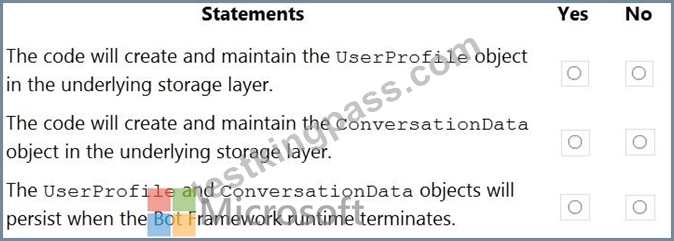
Answer:
Explanation: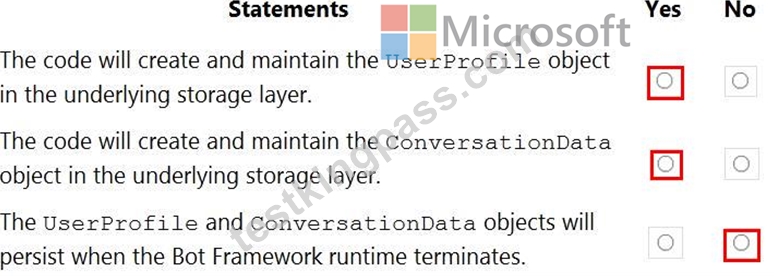
Reference:
https://docs.microsoft.com/en-us/azure/bot-service/bot-builder-howto-v4-state
NEW QUESTION # 181
You have an Azure subscription that contains an Azure Al Content Safety resource named CS1. You need to use the SDK to call CS1 to identify requests that contain harmful content. How should you complete the code? lo answer, select the appropriate options m the answer area.
NOTE: Each correct selection is worth one point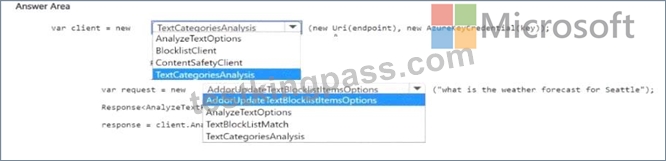
Answer:
Explanation: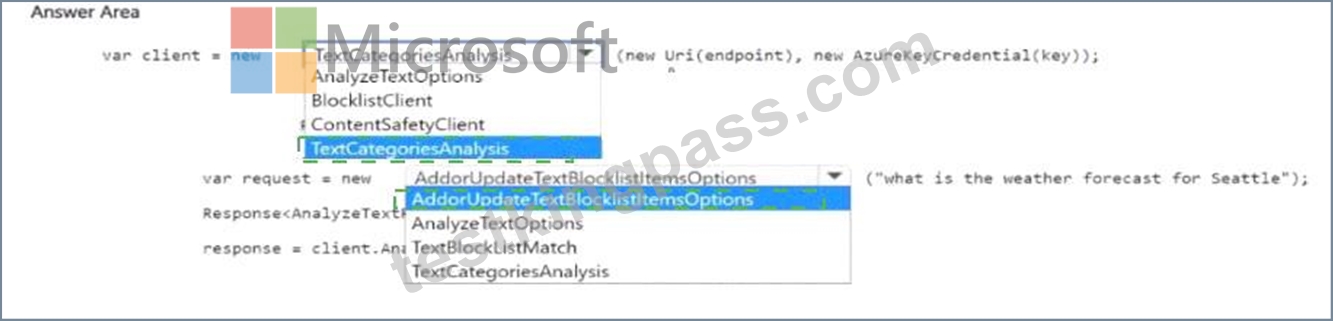
Explanation:
To detect harmful content with Azure AI Content Safety using the .NET SDK, you instantiate a ContentSafetyClient with the endpoint and key. For text moderation, you construct an AnalyzeTextOptions object with the input string (and optionally specify categories, blocklists, etc.). You then call client.
AnalyzeText(AnalyzeTextOptions options) and inspect the result (e.g., categories analysis and blocklist matches).
Code completed:
var client = new ContentSafetyClient(new Uri(endpoint), new AzureKeyCredential(key)); var request = new AnalyzeTextOptions("what is the weather forecast for Seattle"); Response<AnalyzeTextResult> response = client.AnalyzeText(request); Microsoft Azure AI References
* Azure AI Content Safety - SDK usage for text analysis with ContentSafetyClient and AnalyzeTextOptions (Analyze Text API).
* Azure AI Content Safety - Concepts: text categories (hate/sexual/violence/self-harm) and blocklists, returned in AnalyzeTextResult.
NEW QUESTION # 182
You have a chatbot.
You need to test the bot by using the Bot Framework Emulator. The solution must ensure that you are prompted for credentials when you sign in to the bot.
Which three settings should you configure? To answer, select the appropriate settings in the answer area.
NOTE Each correct selection is worth one point.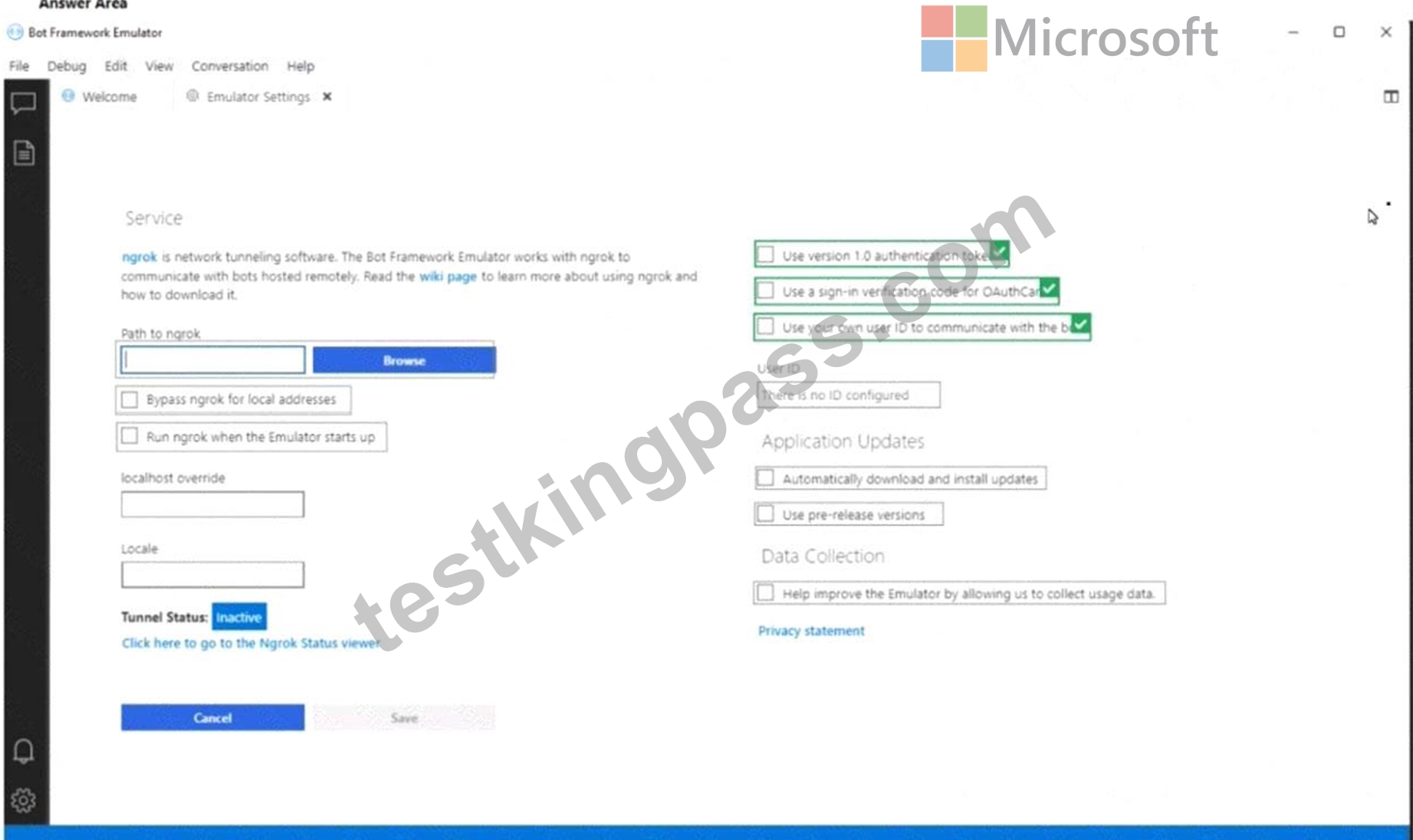
Answer:
Explanation: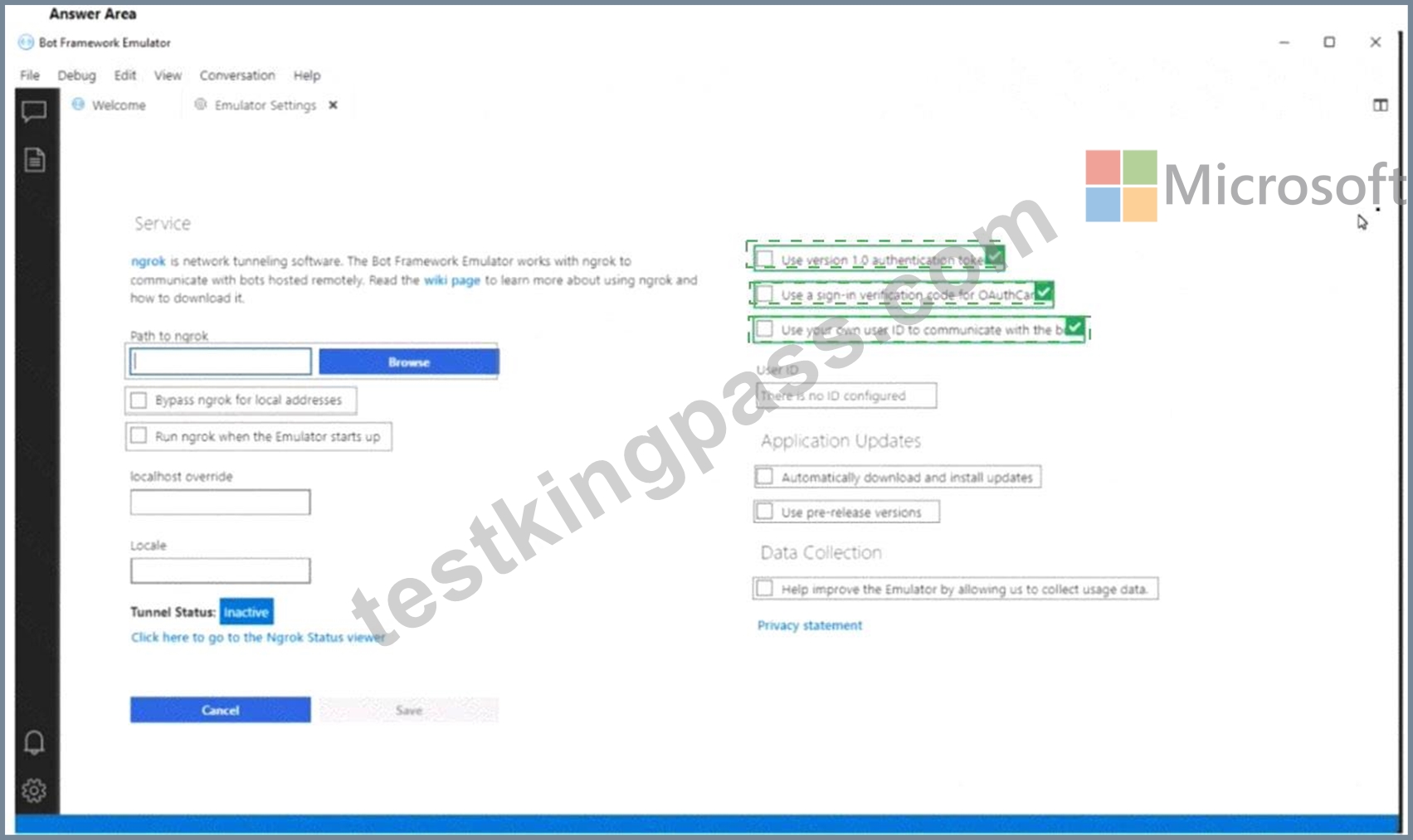
Explanation:
NEW QUESTION # 183
You have a Computer Vision resource named contoso1 that is hosted in the West US Azure region.
You need to use contoso1 to make a different size of a product photo by using the smart cropping feature.
How should you complete the API URL? To answer, select the appropriate options in the answer area.
NOTE:Each correct selection is worth one point.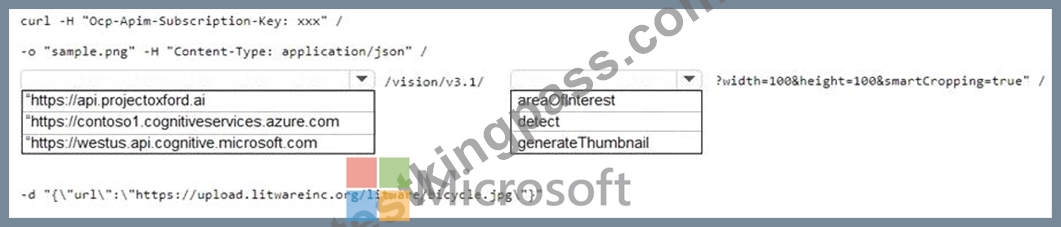
Answer:
Explanation: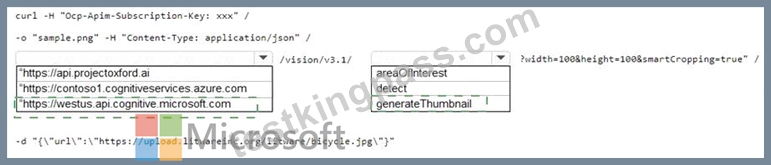
Explanation:
westus.api.cognitive.microsoft.com
generateThumbnail
https://docs.microsoft.com/en-us/rest/api/computervision/3.1/generate-thumbnail/generate-thumbnail#examples POST
https://westus.api.cognitive.microsoft.com/vision/v3.1/generateThumbnail?width=500&height=500&smartCropp Ocp-Apim-Subscription-Key: {API key}
NEW QUESTION # 184
You build a bot by using the Microsoft Bot Framework SDK.
You need to test the bot interactively on a local machine.
Which three actions should you perform in sequence? To answer, move the appropriate actions from the list of actions to the answer area and arrange them in the cor'ect order.
NOTE: More than one order of answer choices is correct. You will receive credit for any of the correct orders you select.
Answer:
Explanation: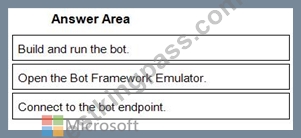
1 - Build and run the bot.
2 - Open the Bot Framework Emulator.
3 - Connect to the bot endpoint.
NEW QUESTION # 185
You are developing a call to the Face API. The call must find similar faces from an existing list named employeefaces. The employeefaces list contains 60,000 images.
How should you complete the body of the HTTP request? To answer, drag the appropriate values to the correct targets. Each value may be used once, more than once, or not at all. You may need to drag the split bar between panes or scroll to view content.
NOTE: Each correct selection is worth one point.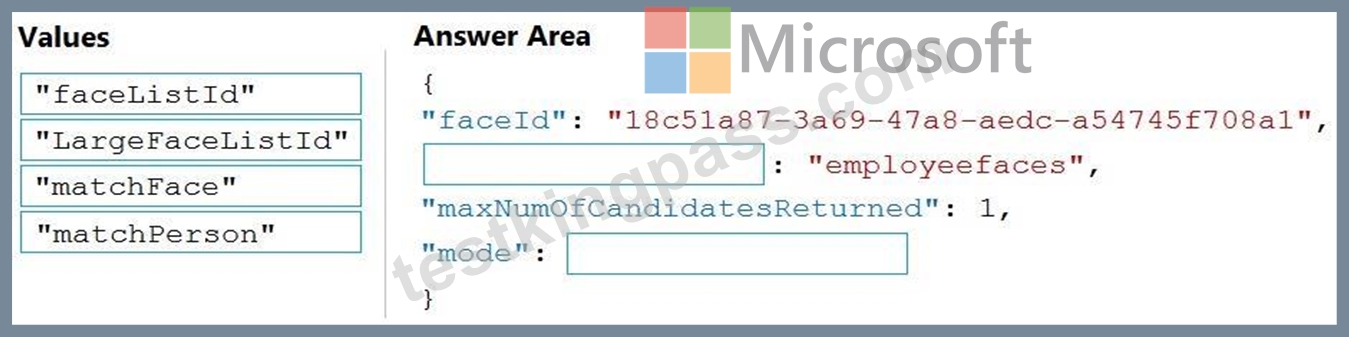
Answer:
Explanation: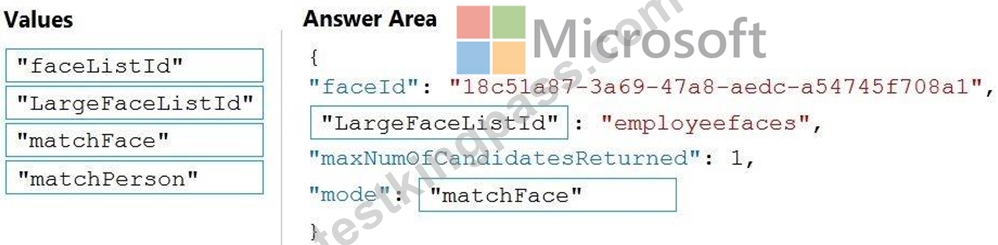
Box 1: LargeFaceListID
LargeFaceList: Add a face to a specified large face list, up to 1,000,000 faces.
Note: Given query face's faceId, to search the similar-looking faces from a faceId array, a face list or a large face list. A "faceListId" is created by FaceList - Create containing persistedFaceIds that will not expire. And a
"largeFaceListId" is created by LargeFaceList - Create containing persistedFaceIds that will also not expire.
Reference:
https://docs.microsoft.com/en-us/rest/api/faceapi/face/findsimilar
NEW QUESTION # 186
You have a flow that you plan to deploy to Azure Machine Learning managed online endpoints for real-time inference.
You need to modify the YAML configuration file for the deployment to ensure that trace data and system metrics are collected and sent to an Application Insights resource named my-app-insights.
How should you modify the file? To answer, select the appropriate options in the answer area.
NOTE: Each correct selection is worth one point.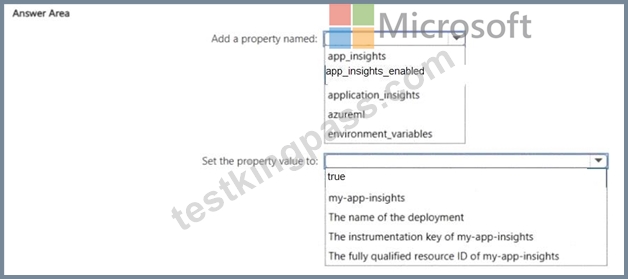
Answer:
Explanation: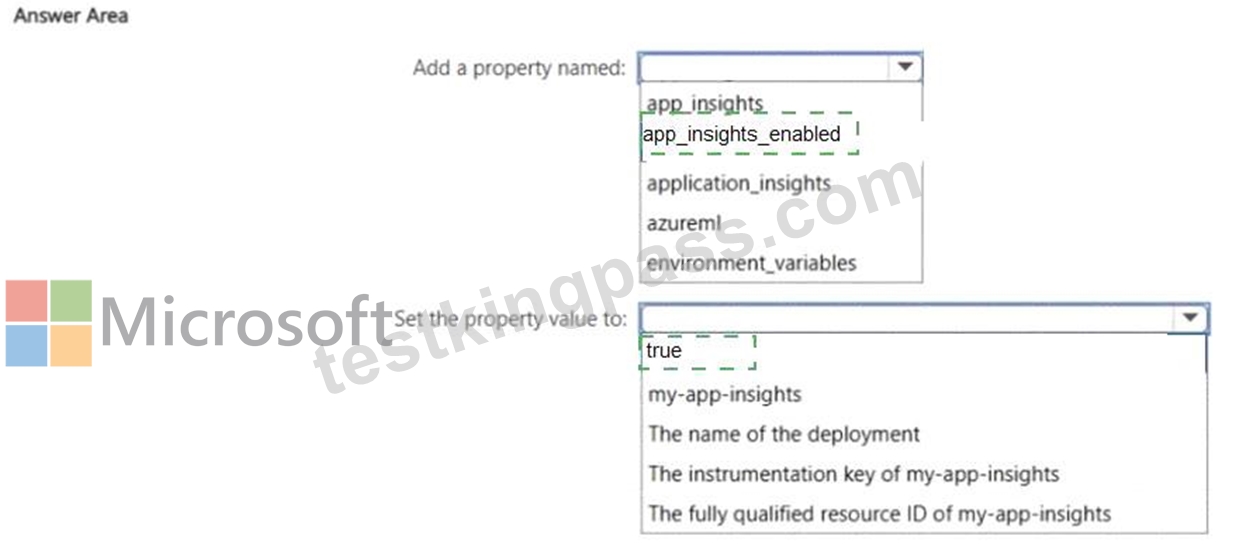
Explanation:
NEW QUESTION # 187
You train a Custom Vision model used in a mobile app.
You receive 1,000 new images that do not have any associated data.
You need to use the images to retrain the model. The solution must minimize how long it takes to retrain the model.
Which three actions should you perform in the Custom Vision portal? To answer, move the appropriate actions from the list of actions to the answer area and arrange them in the correct order.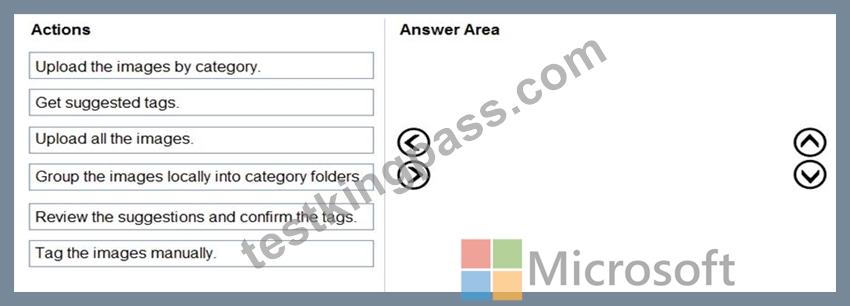
Answer:
Explanation: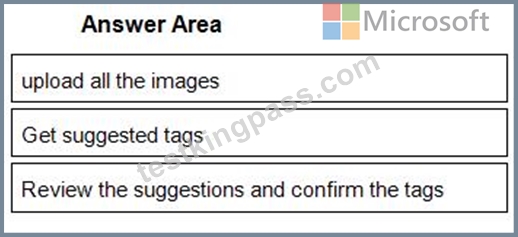
1 - upload all the images
2 - Get suggested tags
3 - Review the suggestions and confirm the tags
Reference:
https://docs.microsoft.com/en-us/azure/cognitive-services/custom-vision-service/suggested-tags
NEW QUESTION # 188
You have an Azure subscription that contains an Azure Al Content Safety resource named Resource1.
You create the following cURL command.
For each of the following statements, select Yes if the statement is true. Otherwise, select No.
NOTE: Each correct selection is worth point.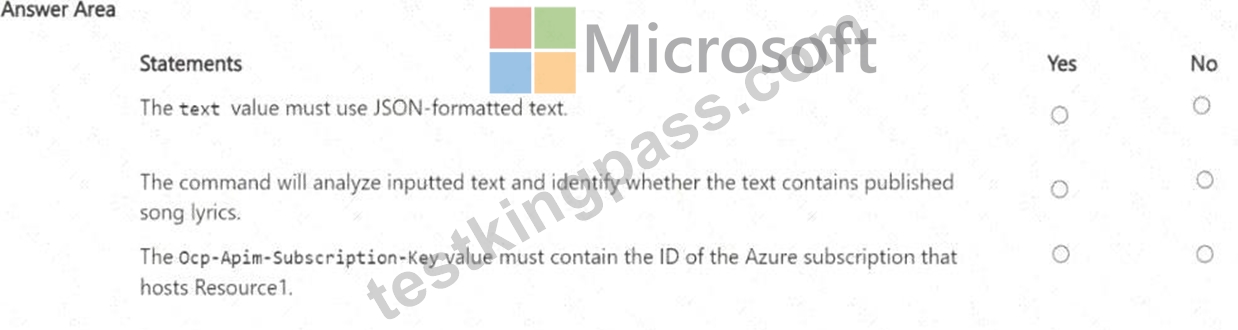
Answer:
Explanation: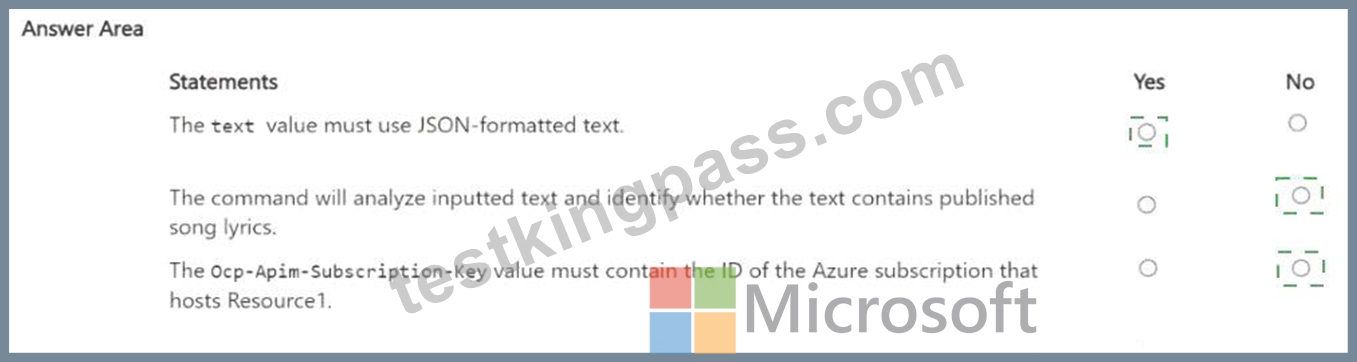
Explanation: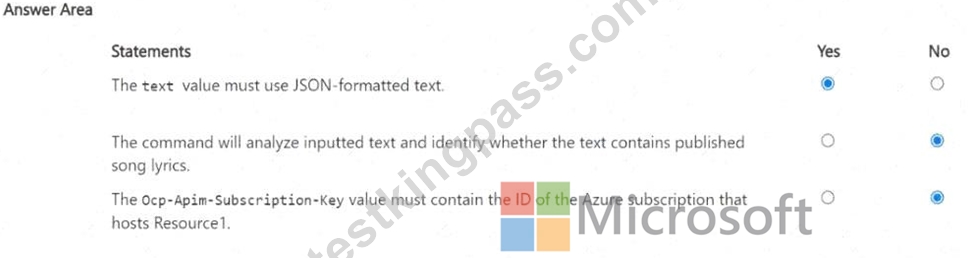
NEW QUESTION # 189
You have an Azure subscription that contains an Azure Al Video Indexer account.
You need to add a custom brand and logo to the indexer and configure an exclusion for the custom brand. How should you complete the REST API call? To answer, select the appropriate options in the answer area.
NOTE: Each correct selection is worth one point.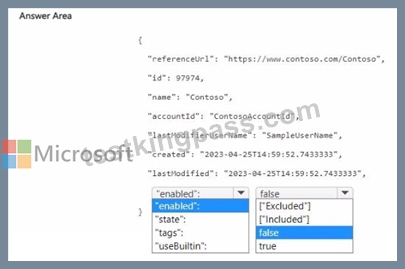
Answer:
Explanation: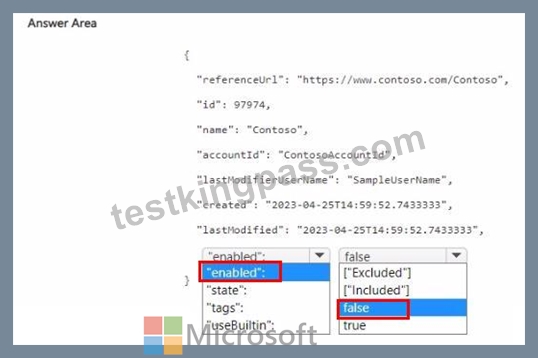
Topic 2, Contoso, Ltd.
Overview
This is a case study Case studies are not timed separately. You can use as much exam time as you would like to complete each case. However, there may be additional case studies and sections on this exam. You must manage your time to ensure that you are able to complete all questions included on this exam in the time provided.
To answer the questions included in a case study, you will need to reference information that is provided in the case study. Case studies might contain exhibits and other resources that provide more information about the scenario that is described in the case study. Each question is independent of the other questions in this case study.
At the end of this case study, a review screen will appear. This screen allows you to review your answers and to make changes before you move to the next section of the exam. After you begin a new section, you cannot return to this section.
To start the case study
To display the first question in this case study, click the Next button. Use the buttons in the left pane to explore the content of the case study before you answer the questions. Clicking these buttons displays information such as business requirements, existing environment, and problem statements. If the case study has an All Information tab. note that the information displayed is identical to the information displayed on the subsequent tabs. When you are ready to answer a question, click the Question button to return to the question.
General Overview
Contoso, Ltd. is an international accounting company that has offices in France. Portugal, and the United Kingdom. Contoso has a professional services department that contains the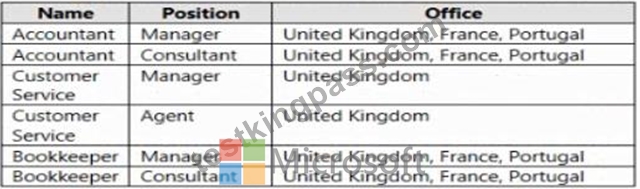
Infrastructure
Contoso has the following subscriptions:
* Azure
* Microsoft 365
* Microsoft Dynamics 365
Azure Active (Azure AD) Directory
Contoso has Azure Active Directory groups for securing role-based access. The company uses the following group naming conventions:
* ICountryJ-[Levell-[Role]
* [Level]-[Role]
Intellectual Property
Contoso has the intellectual property shown in the following table.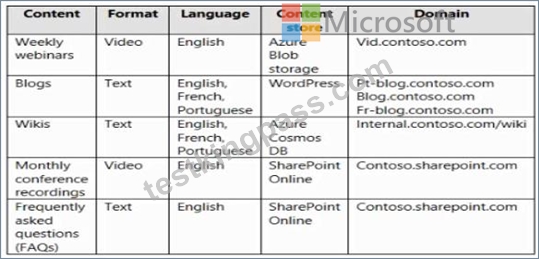
Text-based content is provided only in one language and is not translated.
Planned Projects
Contoso plans to develop the following:
* A document processing workflow to extract information automatically from PDFs and images of financial documents
* A customer-support chatbot that will answer questions by using FAQs
* A searchable knowledgebase of all the intellectual property
Technical Requirements
Contoso identifies the following technical requirements:
* All content must be approved before being published.
* All planned projects must support English, French, and Portuguese.
* All content must be secured by using role-based access control (RBAC).
* RBAC role assignments must use the principle of least privilege.
* RBAC roles must be assigned only to Azure Active Directory groups.
* Al solution responses must have a confidence score that is equal to or greater than 70 percent.
* When the response confidence score of an Al response is lower than 70 percent, the response must be improved by human input.
Chatbot Requirements
Contoso identifies the following requirements for the chatbot:
* Provide customers with answers to the FAQs.
* Ensure that the customers can chat to a customer service agent.
* Ensure that the members of a group named Management-Accountants can approve the FAQs.
* Ensure that the members of a group named Consultant-Accountants can create and amend the FAQs.
* Ensure that the members of a group named the Agent-CustomerServices can browse the FAQs.
* Ensure that access to the customer service agents is managed by using Omnichannel for Customer Service.
* When the response confidence score is low. ensure that the chatbot can provide other response options to the customers.
Document Processing Requirements
Contoso identifies the following requirements for document processing:
* The document processing solution must be able to process standardized financial documents that have the following characteristics:
* Contain fewer than 20 pages.
* Be formatted as PDF or JPEG files.
* Have a distinct standard for each office.
* The document processing solution must be able to extract tables and text from the financial documents.
* The document processing solution must be able to extract information from receipt images.
* Members of a group named Management-Bookkeeper must define how to extract tables from the financial documents.
* Members of a group named Consultant-Bookkeeper must be able to process the financial documents.
Knowledgebase Requirements
Contoso identifies the following requirements for the knowledgebase:
* Supports searches for equivalent terms
* Can transcribe jargon with high accuracy
* Can search content in different formats, including video
* Provides relevant links to external resources for further research
NEW QUESTION # 190
You develop an application that uses the Face API.
You need to add multiple images to a person group.
How should you complete the code? To answer, select the appropriate options in the answer area.
NOTE: Each correct selection is worth one point.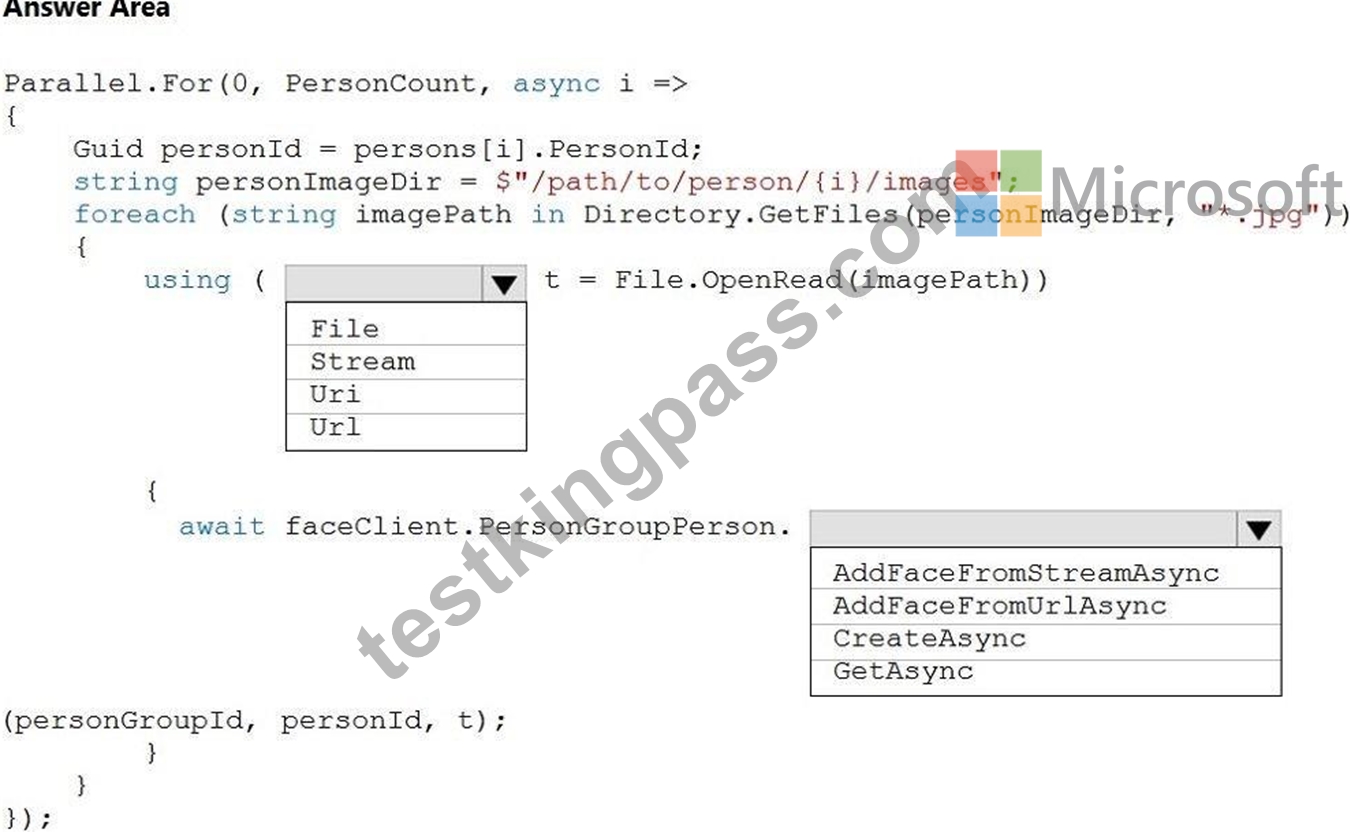
Answer:
Explanation: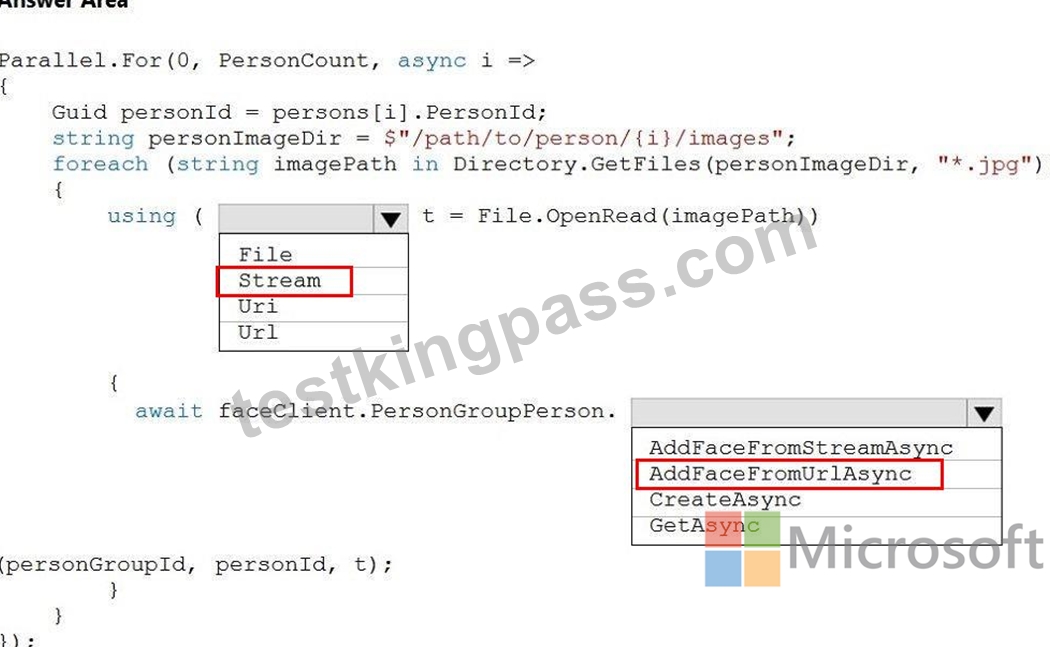
NEW QUESTION # 191
Select the answer that correctly completes the sentence.
Answer:
Explanation:
NEW QUESTION # 192
You have an Azure subscription that contains an Azure OpenAI resource named OpenAI1 and a user named User1.
You need to ensure that User1 can upload datasets to OpenA11 and finetune the existing models. The solution must follow the principle of least privilege.
Which role should you assign to User!?
- A. Cognitive Services OpenAI Contributor
- B. Contributor
- C. Cognitive Services Contributor
- D. Cognitive Services OpenAI User
Answer: A
Explanation:
* A user User1 must be able to upload datasets and fine-tune existing models in Azure OpenAI.
* The role must follow principle of least privilege.
Role analysis:
* A. Cognitive Services Contributor: Too broad; allows management of all Cognitive Services resources, not least privilege.
* B. Contributor: Overly permissive; allows full management rights on the entire resource, not just OpenAI.
* C. Cognitive Services OpenAI User: Grants permissions only to use models (query endpoints). Does not allow fine-tuning or dataset upload.
* D. Cognitive Services OpenAI Contributor: Correct role. This provides the ability to manage OpenAI resources, including uploading training data and fine-tuning models.
The answer: D. Cognitive Services OpenAI Contributor
Microsoft Reference:
* Azure RBAC roles for Azure OpenAI
* Built-in roles: Cognitive Services OpenAI Contributor
NEW QUESTION # 193
......
The AI-102 Exam is intended for professionals who are responsible for designing and implementing AI solutions that use Azure services. AI-102 exam is ideal for developers, architects, and data scientists who are interested in expanding their AI skills and knowledge. AI-102 exam covers a variety of topics, including designing AI solutions, implementing AI workflows, creating and deploying machine learning models, and integrating AI solutions with other Azure services.
AI-102 Exam Dumps, AI-102 Practice Test Questions: https://www.testkingpass.com/AI-102-testking-dumps.html
Free AI-102 Exam Dumps to Pass Exam Easily: https://drive.google.com/open?id=1GTlMjEJRBzITsOhAUbFfU3pmg6g_smRd