


Maximum Grades By Making ready With H12-831_V1.0-ENU Dumps UPDATED 2025
Prepare H12-831_V1.0-ENU Exam Questions [2025] Recently Updated Questions
Huawei H12-831_V1.0 exam is a challenging test that covers a wide range of topics, including advanced routing protocols, MPLS VPN technology, QoS, multicast routing, and IPv6. H12-831_V1.0-ENU exam is divided into multiple sections, each of which focuses on a specific area of network technology. H12-831_V1.0-ENU exam is designed to test the candidate's knowledge of all aspects of network technology, from basic routing and switching to advanced topics like MPLS and QoS.
Huawei H12-831_V1.0 certification exam is a comprehensive exam that requires extensive preparation. Candidates are required to have a thorough understanding of the exam objectives, exam format, and exam content. H12-831_V1.0-ENU exam is conducted in English, and candidates are required to have a good understanding of the language. H12-831_V1.0-ENU exam consists of multiple-choice questions and simulation questions, which test the candidate's practical skills.
NEW QUESTION # 72
Regarding the MPLS forwarding process, the description of Ingress node forwarding is correct:
- A. CheckNHLFETable entry, you can get outbound interface, next hop, outbound label and label operation type The label operation type isPush
- B. according toILMtableTunnel IDfind the correspondingNHLFEentry, willLFIBentry andNHLFEtable entry
- C. existIPThe obtained label is pressed into the packet, and according to theQoSPolicy processingEXRSimultaneous processingL,,Then the packagedMPLSThe packet is sent to the next hop
- D. IngressAfter the node receives the data packet, it will first checkILMlooking forTunnel ID
Answer: A,C
NEW QUESTION # 73
esigth uses different colors to distinguish different alarm levels, red represents emergency, orange represents important, and yellow represents The table is secondary, and blue represents the prompt. Which of the following statements about different alarm levels is correct: (multiple choice)
- A. Minor: There is currently a certain impact on the business, but corrective actions are required to prevent serious failure alarms
- B. Important: An alarm that has affected the business and will have serious consequences if not handled in time
- C. Prompt: A potential or imminent business-impacting failure has been detecteD. but currently has little business impact
- D. Urgent: Alerts that have affected the business and require immediate corrective action
Answer: A,B,C,D
NEW QUESTION # 74
When configuring the DHCP Relay function on the device, the VLANIF interface of the relay connected to the client must be bound to the DHCP server group, and the bound DHCP server group must be configured with the proxy DHCP server IP address.
- A. TRUE
- B. FALSE
Answer: B
NEW QUESTION # 75
Basic QinQ can select the outer tag encapsulation method according to the type of business.
- A. TRUE
- B. FALSE
Answer: B
NEW QUESTION # 76
(Drag and drop) As shown in the figure, there is a message containing three-layer label headers. Please select the corresponding values of the X, Y, and Z fields in the figure. (Decimal)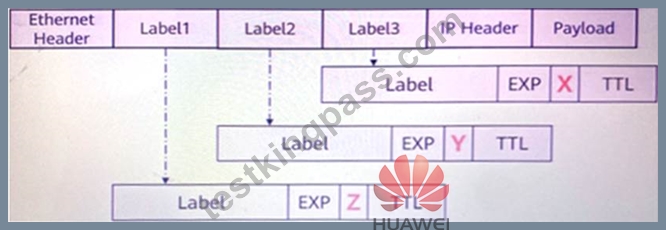
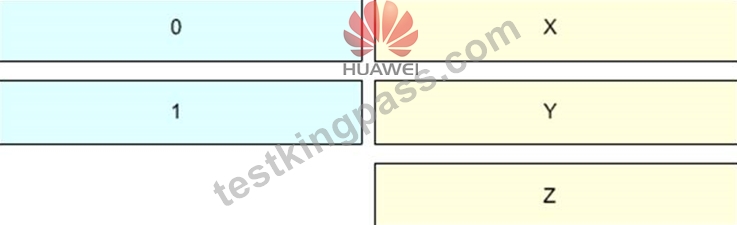
Answer:
Explanation: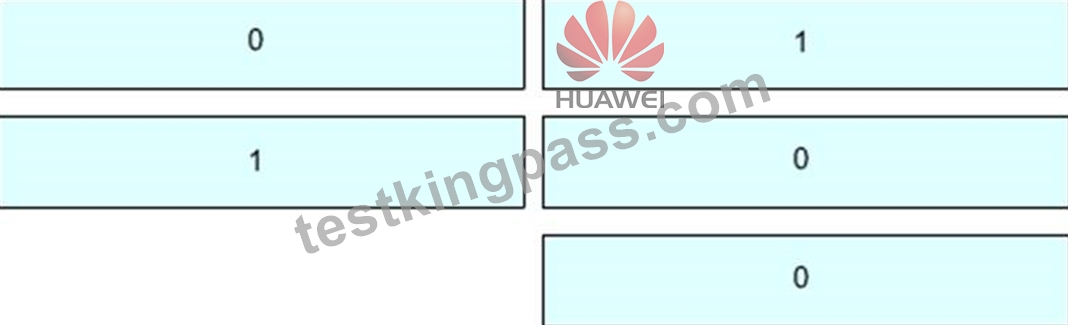
NEW QUESTION # 77
MPLS-straight is slower than IP forwarding.
- A. False
- B. True
Answer: A
NEW QUESTION # 78
Fill in Blanks
by executing___________The command can completely isolate the second and third layer users of different ports on the same LAN and cannot communicate. (Please use English and lowercase letters to complete the command, and the command cannot be abbreviated)
Answer:
Explanation:
portisolateenable
NEW QUESTION # 79
Regarding BGP/MPLS IPVPN data forwarding, which of the following descriptions is wrong?
- A. The outer label during data forwarding can be allocated by LDP
- B. The inner label during data forwarding is assigned by MP-BGP
- C. When data is transmitted on the BCP/MPLS IPVPN backbone network, it always carries two layers of labels
- D. The data sent by the PE to the CE is an IPv4 packet
Answer: C
NEW QUESTION # 80
When OSPFv2 evolves to OSPFv3, the format and function of LSA are exactly the same, except that the network layer address in LSA changes from IPv4 to IPv6.
- A. TRUE
- B. FALSE
Answer: B
NEW QUESTION # 81
According to the configuration shown in the figure below, you can know that how many interfaces of R4 are advertised into IS-IS?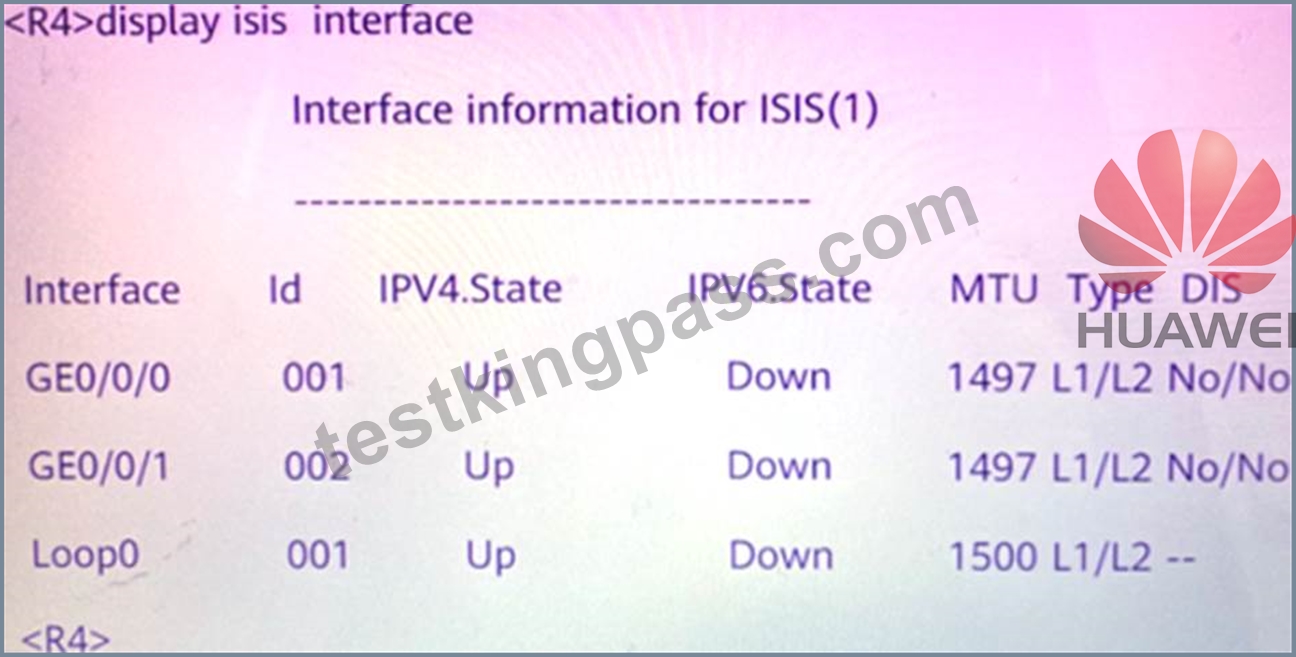
- A. 0
- B. 1
- C. 2
- D. 3
Answer: C
NEW QUESTION # 82
According to this picture, you can judge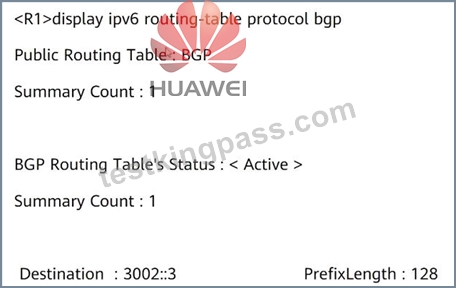
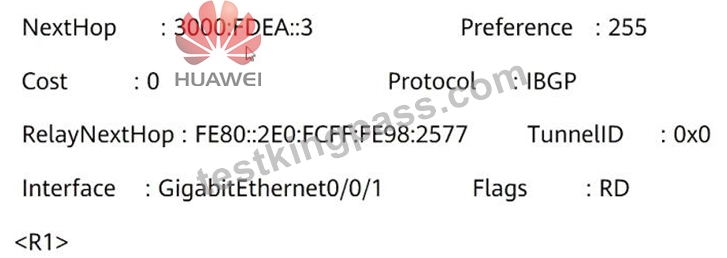
- A. The optimal outgoing interface for R1 to access room 3000: FDEA::3 is GigabitEtherneto/0/1
- B. R1 with 3000:FDEA::3 is IB6P neighbor
- C. R1 has a TCP connection with 3000:FDEA::3
- D. R1 learned route 3002 through IBGP::3/128
Answer: B,D
NEW QUESTION # 83
(Drag and drop) Please match the following DHCP attack types with corresponding explanations.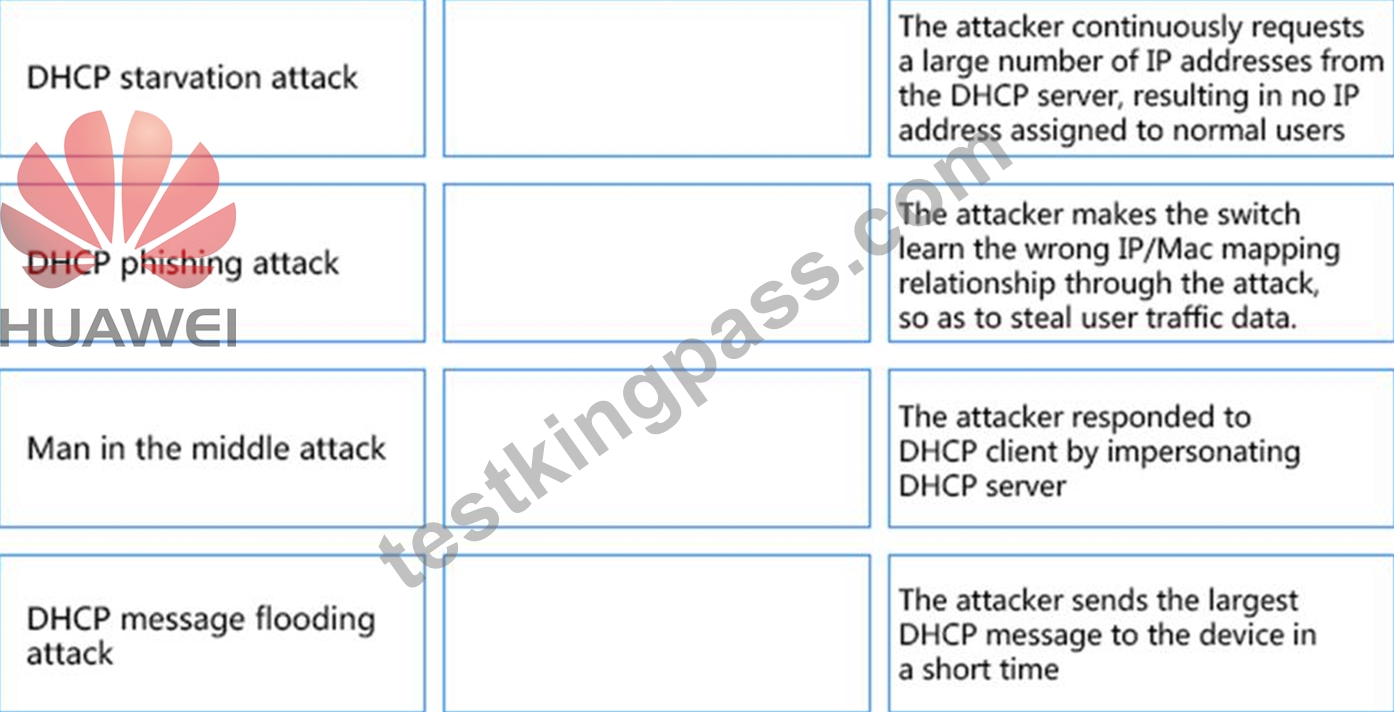
Answer:
Explanation: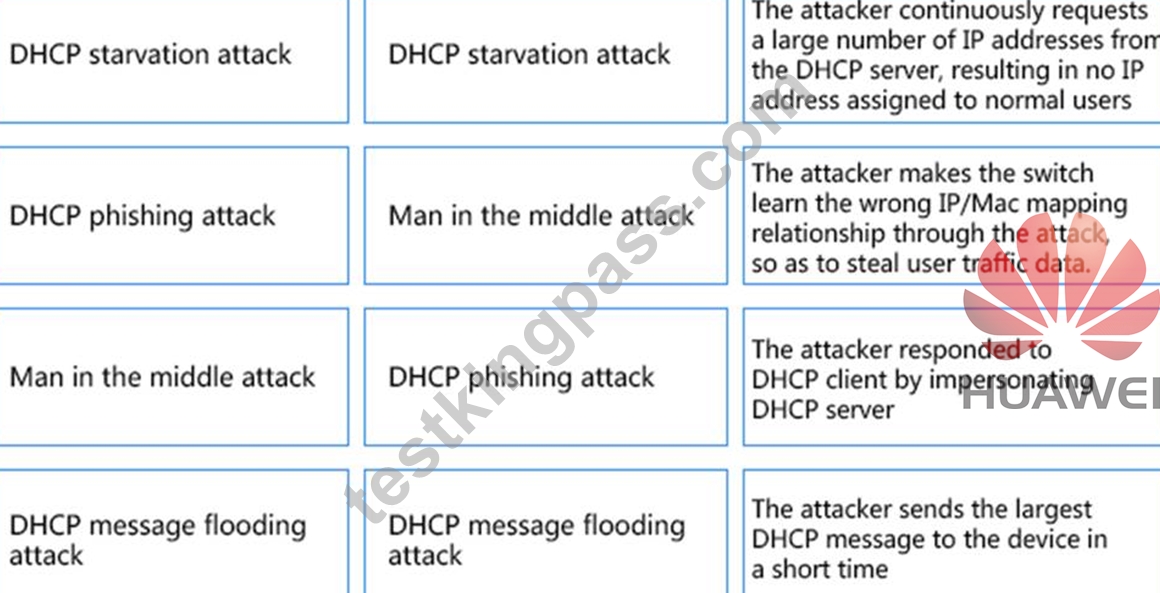
NEW QUESTION # 84
The routing attributes of the three routing entries are shown in the figure. Assuming that the next hops of the three routing entries are all reachable, when these three routing entries are After the entries arrive at the BP router in order, by default, BGP will finally call a route entry?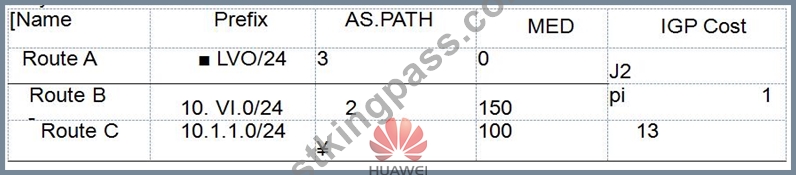
- A. slightly
- B. Route A
- C. Route B
- D. Route C
Answer: B
NEW QUESTION # 85
In intra-domain MPLS VPN networks, data packets will be encapsulated with two layers of MPLS when they enter the public network and are forwarded.
Label, a description of the two-layer label in the following options. What is wrong is:
- A. M PLS VPNThe outer layer is labeled as a private network label, and the inner layer label is called a public network label.
- B. Layer labels are used inPEThe device sends the packet correctly to the correspondingVPNmiddle
- C. By default, the outer label is popped before the packet is forwarded to the last hop device
- D. MPLS VPNThe outer label is made byLDPprotocol or statically assigneD. the inner label is assigned by the correct end MP-BGPassigned by neighbors
Answer: A,B
NEW QUESTION # 86
In the preparation phase of a migration project, the software and hardware need to be checked. Match the operation objects in the preparation phase with the corresponding operation contents.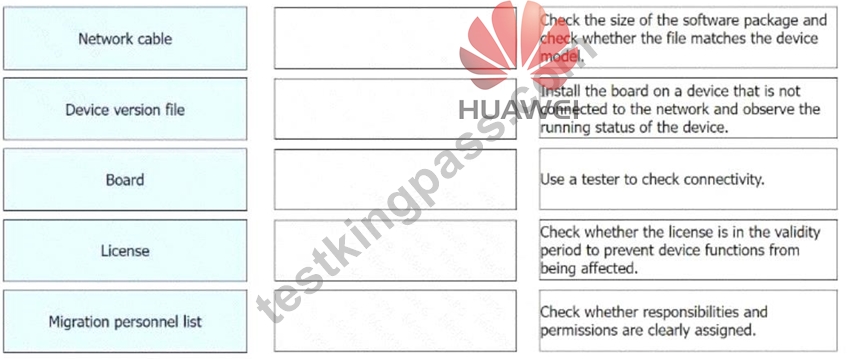
Answer:
Explanation: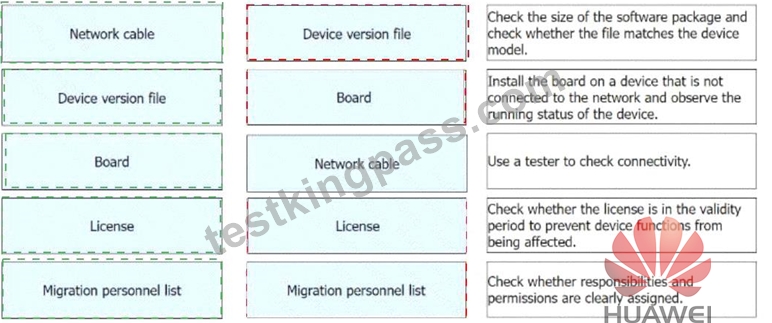
Explanation:
Network cable # Use a tester to check connectivity.
Device version file # Check the size of the software package and check whether the file matches the device model.
Board # Install the board on a device that is not connected to the network and observe the running status of the device.
License # Check whether the license is in the validity period to prevent device functions from being affected.
Migration personnel list # Check whether responsibilities and permissions are clearly assigned.
Comprehensive and Detailed In-Depth Explanation:
1. Network Cable - Connectivity Testing:
* Before starting a migration project, all network cables should be tested for physical connectivity issues.
* Network testers can be used to detect any breaks, shorts, or incorrect wiring.
* Ensuring proper connectivity avoids delays and troubleshooting issues during the migration.
2. Device Version File - Software Compatibility Check:
* Firmware and software versions must be verified before upgrading or migrating network devices.
* The device version file should match the model and hardware specifications to avoid compatibility issues.
* If incorrect software is used, the device may not function properly or could become inoperable.
3. Board - Installation and Hardware Verification:
* Before installing new hardware modules (boards, line cards, etc.) into a production environment, they should be tested in isolation.
* Testing ensures the board is operational and does not introduce faults into the system.
* If a board is faulty, it can cause device failure or unexpected behavior in the migration.
4. License - Validity and Activation Check:
* Some network devices require licenses for full functionality (e.g., advanced routing, security features).
* If a license is expired or missing, critical functions may be disabled after migration.
* Checking license status in advance prevents unexpected downtime or service disruptions.
5. Migration Personnel List - Roles and Responsibilities Assignment:
* Large network migrations require clear responsibility assignments for each team member.
* A migration personnel list ensures that everyone knows their role, tasks, and permissions.
* Proper coordination avoids miscommunication, errors, and project delays.
Key Takeaways:
# Network cables should be tested for connectivity.# Software versions should match the hardware model to prevent incompatibility.# Hardware boards should be tested before installing into production.
# Licenses should be verified to prevent service disruptions.# Migration personnel roles should be clearly defined for smooth execution.
HCIP-Datacom-Advanced Routing & Switching Technology References:
* Huawei HCIP-Datacom Official Certification Guide, Chapter on Network Migration Best Practices
.
* Huawei Enterprise Networking Whitepapers, Guidelines on Software & Hardware Pre-checks for Migration.
* Huawei Technical Documentation, License Management in Huawei Datacom Devices.
NEW QUESTION # 87
An engineer uses two routers to test IPv6 services, and simulates the headquarters and branches by running BGP4+ of interconnection. As shown in the figure, an engineer captures packets to view the update packets sent by R1. About this message Description of information, which of the following statements is correct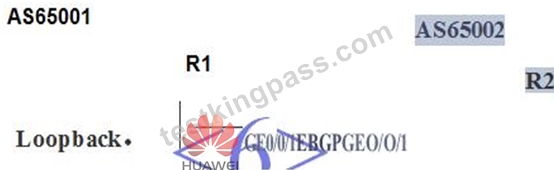
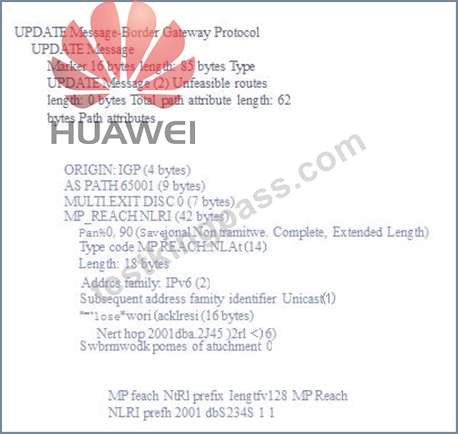
- A. This message describes the current revocationIPv6routing
- B. The next hop address of the route described in this packet is:2001:db8::2345:l.:l
- C. the route described in this packet may be throughimportbow
Answer: C
NEW QUESTION # 88
On the network shown in the figure, EBGP peer relationships are established between neighboring routers through directly connected interfaces.
* The router ID of each router is 10.0.X.X, and the AS number is 6500X, where X is the number of the router.
* Both R1 and R4 have static routes to 192.168.1.0/24, which are imported to BGP through the import-route command.
* The aggregate 192.168.1.0/16 detail-suppressed command is configured on R2.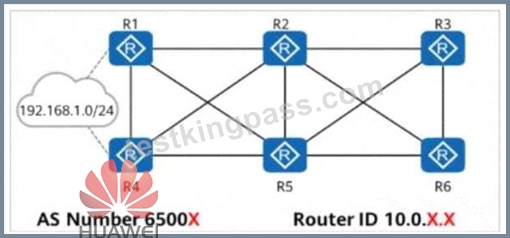
Which of the following is the path for traffic from R3 to 192.168.1.0/24?
- A. R3 # R2 # R1
- B. R3 # R6 # R5 # R1
- C. R3 # R5 # R4
- D. R3 # R5 # R1
Answer: D
Explanation:
Comprehensive and Detailed In-Depth Explanation:
Understanding the BGP Network Topology in the Question:
* EBGP Peering & Route Distribution
* Each router forms EBGP peer relationships with directly connected neighbors.
* BGP learns and propagates routes via EBGP neighbors.
* R1 and R4 advertise the static route 192.168.1.0/24 into BGP.
* Effect of the aggregate 192.168.1.0/16 detail-suppressed Command on R2
* R2 performs BGP route aggregation, summarizing 192.168.1.0/24 into a larger 192.168.1.0/16 route.
* The detail-suppressed option hides the more specific 192.168.1.0/24 prefix when advertising routes.
* As a result, R2 does not advertise the specific 192.168.1.0/24 route to its neighbors.
Route Selection and Traffic Flow Analysis:
* R1 and R4 originate 192.168.1.0/24 and advertise it via BGP.
* R2 does not advertise the 192.168.1.0/24 route because of the detail-suppressed command.
* R3 cannot learn the specific route from R2, so it must choose an alternative path via R5.
* R5 learns 192.168.1.0/24 from R1 and advertises it to R3.
* Thus, the best available path for R3 to reach 192.168.1.0/24 is R3 # R5 # R1.
# Correct Path: R3 # R5 # R1
Checking Each Option:
# Option A: R3 # R5 # R1 (Correct)
* R3 learns 192.168.1.0/24 from R5, and R5 forwards traffic to R1, which has the static route.
# Option B: R3 # R2 # R1 (Incorrect)
* R2 does not advertise 192.168.1.0/24 due to route summarization (detail-suppressed), so R3 cannot use R2 as the next hop.
# Option C: R3 # R6 # R5 # R1 (Incorrect)
* This is an unnecessary detour.
* R3 has a direct EBGP connection with R5, so it will use the shortest path (R3 # R5 # R1) instead of going through R6.
# Option D: R3 # R5 # R4 (Incorrect)
* R3 prefers the shortest AS path to reach 192.168.1.0/24.
* Since R1 and R4 both advertise the route, R3 will prefer the route via R5 to R1 rather than R4.
Final Conclusion:
# A. The correct path for traffic from R3 to 192.168.1.0/24 is R3 # R5 # R1.
Thus, the correct answer is: A.
NEW QUESTION # 89
A campus deploys OSPF to implement network interworking. The LSDB of R2 is shown in the figure. From this LSDB. it is possible to What information was obtained?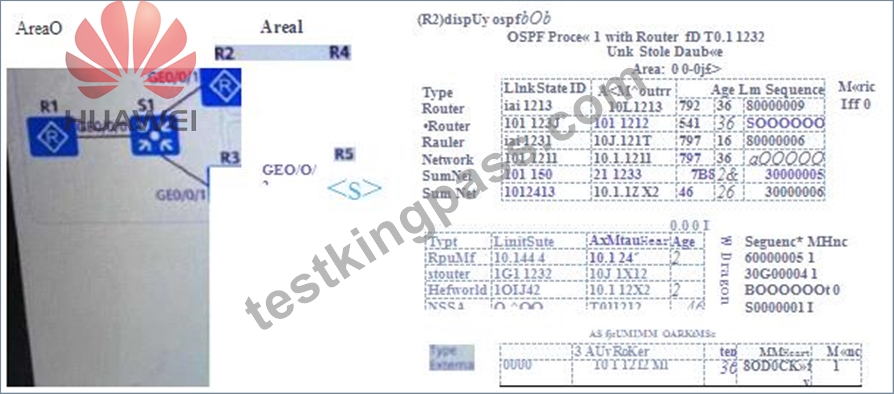
- A. R2existOSPFThe default route is delivered in the process
- B. R2WillType7 LSAThe default route is converted toType5 LSAdefault route for
- C. ArealNone inType3 LSA. maybeR2in the area1In the correct directiontype3 LSAfiltered
- D. Area 1forNSSAarea
Answer: A,D
NEW QUESTION # 90
As shown in the figure, an engineer uses 4 routers to test branch network interoperability. Among them, R1, R2, and R3 in branch 1 deploy OSPF to implement network interoperability. R2, R3, and R4 in branch 2 deploy IS-S to implement network interoperability. Now the engineer wants to implement R1 to access the loopback interface address of R4. Which of the following operations can meet this requirement?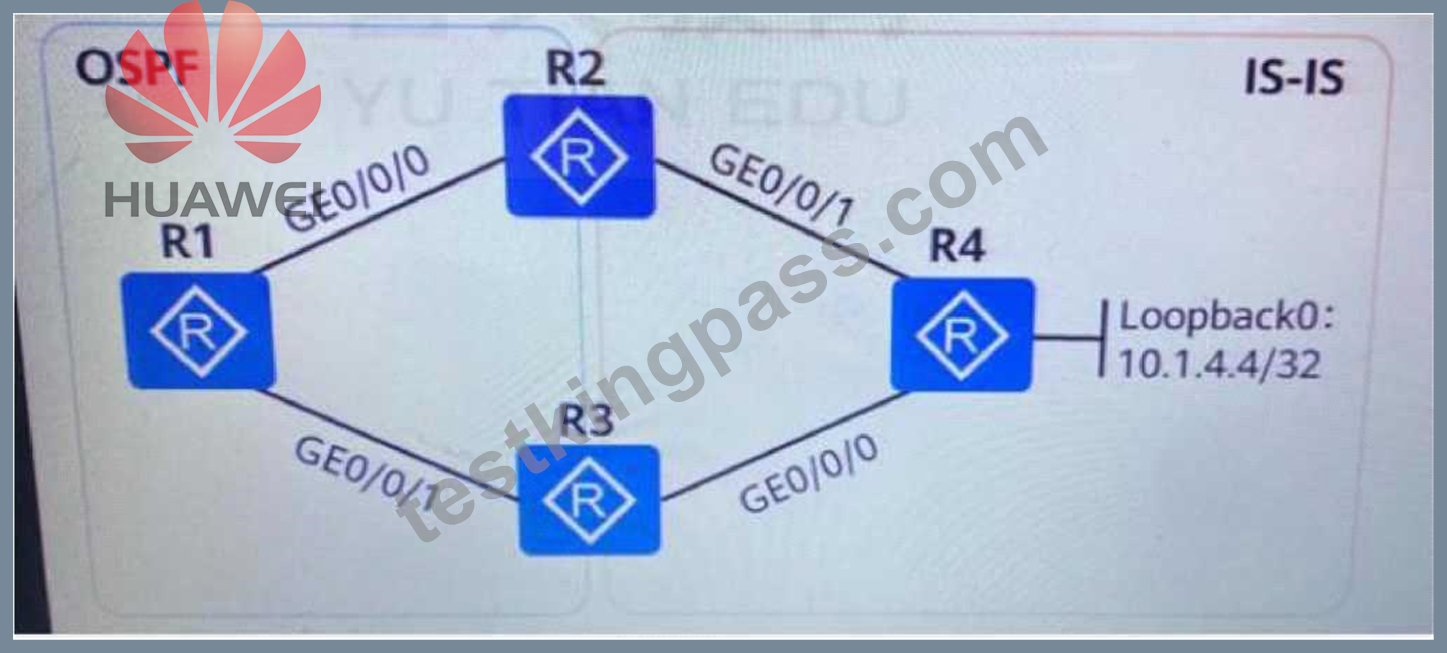
- A. only atR2ofIS-ISDuring the process, the default route is advertised
- B. No configuration required
- C. only atR2ofOSPFDuring the process, the default route is advertised
- D. existR2ofOSFFprocess neutralizationIS-ISDuring the process, the default route is advertised separately
Answer: D
NEW QUESTION # 91
As shown below: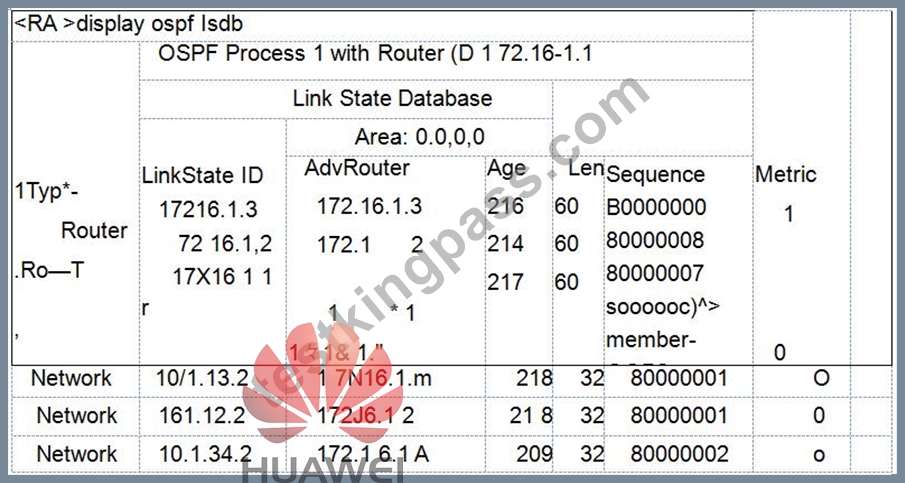
- A. area. have4indivualMAThe internet
- B. area. have4router
- C. area. have8router
- D. area. have8indivualMAThe internet
Answer: A,B
NEW QUESTION # 92
On an enterprise network shown in the figure, EBGP is deployed between CEs and PEs.
CE1 sends a VPN route to PE1.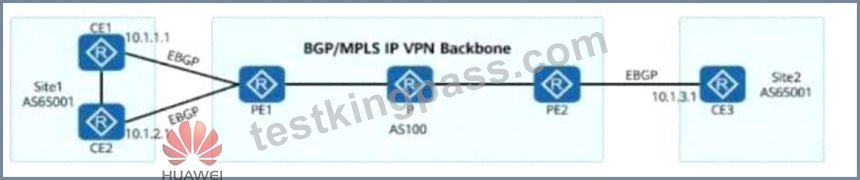
Which of the following statements are false?
Options:
- A. To enable CE3 to receive the route, run the command peer 10.1.1.1 soo 200:1 on PE1.
- B. If the commands peer 10.1.1.1 soo 200:1 and peer 10.1.2.1 soo 200:1 are run on PE1, CE2 accepts the route.
- C. If no additional action is taken, CE3 discards the route.
- D. If the command peer 10.1.3.1 substitute-as is run on PE2, CE3 accepts the route.
Answer: A,B
Explanation:
Comprehensive and Detailed In-Depth Explanation:
1. Understanding Site of Origin (SoO) in MPLS VPNs
* SoO (Site of Origin) is used in MPLS VPNs to prevent loops in multi-homed CE scenarios.
* Routes with the same SoO value are not advertised back to the same site.
2. Analysis of Each Answer Choice
A: "To enable CE3 to receive the route, run the command peer 10.1.1.1 soo 200:1 on PE1." (# False)
* SoO is used to prevent loops by tagging routes that belong to the same site.
* Applying SoO (200:1) on PE1 for CE1 means that any other PE (such as PE2) receiving the route will not advertise it back to the same site (CE1).
* This statement is false because applying SoO here does not directly enable CE3 to receive the route. Instead, CE3 must accept routes with SoO values properly configured.
B: "If the commands peer 10.1.1.1 soo 200:1 and peer 10.1.2.1 soo 200:1 are run on PE1, CE2 accepts the route." (# False)
* SoO ensures that a route received from one CE is not sent back to another CE in the same site.
* If SoO (200:1) is assigned to CE1 and CE2, routes will be blocked because they share the same SoO tag.
* Thus, CE2 will not accept the route, making this statement false.
C: "If the command peer 10.1.3.1 substitute-as is run on PE2, CE3 accepts the route." (# True)
* substitute-as allows a router to replace the received AS number in the AS_PATH with another AS number, ensuring that routes are accepted even when AS_PATH filtering is in place.
* This prevents CE3 from rejecting the route due to AS-Path loop prevention.
* # Thus, this statement is true.
D: "If no additional action is taken, CE3 discards the route." (# True)
* By default, CE3 will discard the route because of BGP loop prevention (same AS in the AS_PATH).
* To allow CE3 to receive the route, the allowas-in or substitute-as command must be configured on PE2.
* # Thus, this statement is true.
3. Evaluating the Answer Choices
Option
Correct?
Reasoning
A
# False
Applying SoO does not directly enable CE3 to receive the route.
B
# False
If both CE1 and CE2 have the same SoO value, CE2 will reject the route.
C
# True
Substitute-AS allows CE3 to accept the route by modifying the AS-Path.
D
# True
Without additional configuration, CE3 will discard the route due to AS-Path loop prevention.
# Correct answer: A and B are false.
Final Conclusion:
* SoO prevents routing loops in MPLS VPN multi-homing.
* CE2 will reject the route if it has the same SoO as CE1.
* CE3 requires the substitute-as or allowas-in command to accept the route.
* Thus, statements A and B are false.
NEW QUESTION # 93
Because BGP is the EGP routing protocol, BGP routing policies can only be deployed between EBGP neighbors. Routing policies deployed between IBGP neighbors are invalid.
- A. TRUE
- B. FALSE
Answer: B
NEW QUESTION # 94
......
Huawei H12-831_V1.0-ENU (HCIP-Datacom-Advanced Routing & Switching Technology V1.0) Exam is a certification exam designed to test the knowledge and skills of professionals who work with advanced routing and switching technology. H12-831_V1.0-ENU exam is the final step in the Datacom certification track, and passing it will earn you the HCIP-Datacom-Advanced Routing & Switching Technology certification.
Give push to your success with H12-831_V1.0-ENU exam questions: https://www.testkingpass.com/H12-831_V1.0-ENU-testking-dumps.html
H12-831_V1.0-ENU 100% Guarantee Download H12-831_V1.0-ENU Exam PDF Q&A: https://drive.google.com/open?id=1KWvIFK9Ihq1Jv5_ApUvUW7uo3yMDxtnr